Chronicle: Upgrading Angular 15 → 20 Under Active Development (Signals, Nx, PrimeNG) Without Freezing Features
A Fortune‑100 scale case study: how we moved a live, multi‑tenant Angular app across 3+ major versions while shipping weekly—no freeze, no drama.
We moved Chronicle from Angular 15 to 20 while shipping weekly—no freeze, no SEV‑1s, and faster builds on day one.Back to all posts
I’ve upgraded Angular apps for a major airline, a leading telecom provider, and a global entertainment company—often while the roadmap keeps moving. Chronicle was no different: a multi‑tenant analytics dashboard with PrimeNG, role‑based access, and real‑time widgets. The mandate: move from Angular 15 to 20+ across 3+ major versions without pausing delivery. Here’s how we did it, what we automated, and the numbers that matter to stakeholders deciding whether to hire an Angular developer or bring in an Angular consultant.
The Scene: Why This Upgrade Had to Ship Without a Freeze
As companies plan 2025 Angular roadmaps, the question isn’t “Can we upgrade?” It’s “Can we upgrade and keep shipping?” Chronicle is a blueprint for yes. If you need a remote Angular developer with Fortune 100 experience to run this play, we should talk.
Context from enterprise programs
Chronicle’s roadmap couldn’t stall. The app ran revenue‑critical dashboards for a telecom‑like analytics program. We needed Angular 20 for the Vite builder, Signals interop, and SSR options down the line—without slowing the team shipping new widgets every week.
Multi‑tenant analytics app with 1K+ daily users
PrimeNG + custom components; Nx libs for shared domain models
Feature cadence: weekly releases tied to Q1/Q2 ad campaigns
Risks we had to control
I’ve been here before—airport kiosks, telematics dashboards, and employee tracking systems. The pattern is consistent: upgrades fail when you treat them as a single cliff jump. We turned it into a sequence of controlled, measured steps.
Angular 15→20 spans multiple TypeScript and RxJS bumps
PrimeNG breaking changes and style token updates
Strict template/TS checks surfacing hidden regressions
Why Angular Upgrades Stall Feature Velocity—and How Chronicle Avoided It
This is the same discipline I used upgrading a device management portal for an IoT company and a VPS scheduler for a broadcast media network. The result: predictable momentum with numbers leaders can defend in steering meetings.
The usual blockers
Upgrades often become a morale sink. Developers stop features, pile into a mega‑branch, and spend weeks diff‑mining. Business leaders see zero value until the last day—if it lands at all.
Freeze attempts trigger hidden dependencies and morale dips
Monolithic PRs are unreviewable and risky
Uninstrumented UX regressions escape until production
Our counter‑pattern
We made the upgrade a background process that never blocked the mainline. Releases kept flowing. When a risky UI migrated, we flagged it and ran AB comparisons to prove no user‑perceived regressions.
Parallel branch with weekly rebases and small PRs
Feature flags for risky surfaces; runtime toggles via Firebase Remote Config
CI gates: unit/e2e + Lighthouse/Core Web Vitals on every PR
Case Study: Chronicle Angular 15 → 20 Under Active Development
We treated each step as a mini‑release with a measurable outcome. When stakeholders ask why to hire an Angular expert for upgrades, this is the answer: disciplined, testable increments that protect your feature cadence.
1) Dependency & risk map
We enumerated breaks, then scheduled each step with a pass/fail gate. Nothing moved forward unless tests and UX checks were green.
Angular 15→16→17→18→19→20
TypeScript 4.8→5.x, RxJS 7.x, PrimeNG 15→17
Target modern browsers to unlock smaller bundles
2) Incremental ng update plan
We executed the official path with checkpoints and restore points.
Command log
# lockfile hygiene
rm -f package-lock.json && rm -rf node_modules && npm i

# stepwise updates with checkpoints
npx ng update @angular/core@16 @angular/cli@16 --force
npx ng update @angular/core@17 @angular/cli@17 --force
npx ng update @angular/core@18 @angular/cli@18 --force
npx ng update @angular/core@19 @angular/cli@19 --force
npx ng update @angular/core@20 @angular/cli@20 --force

# framework-adjacent
npx ng update rxjs --from 7.5 --to 7.8 --force
npm i -D @angular-devkit/build-angular
3) Nx to contain blast radius
Nx let us upgrade leaf libraries first, run affected tests, and avoid breaking the world. We merged daily, kept main green, and reduced rework.
affected:* targets to keep PRs small
project graph to isolate shared libs and app shells
4) Feature flags for risky UIs
We exposed flags via runtime config. For teams already on Firebase, Remote Config works cleanly with a lightweight init and Signals.
Runtime flags code
// app.config.ts
import { APP_INITIALIZER, inject, provideAppInitializer } from '@angular/core';
import { signal, computed } from '@angular/core';
import { initializeApp } from 'firebase/app';
import { getRemoteConfig, fetchAndActivate, getValue } from 'firebase/remote-config';

export const flags = (() => {
  const _values = signal<Record<string, boolean>>({});
  return {
    get: (key: string) => computed(() => !!_values()[key]),
    setAll: (v: Record<string, boolean>) => _values.set(v)
  };
})();

export function initFlags() {
  const app = initializeApp({ /* env vars */ });
  const rc = getRemoteConfig(app);
  rc.settings.minimumFetchIntervalMillis = 60_000;
  return () => fetchAndActivate(rc).then(() => {
    flags.setAll({
      newSignalsDashboard: getValue(rc, 'newSignalsDashboard').asBoolean(),
      modernTable: getValue(rc, 'modernTable').asBoolean()
    });
  });
}

export const appInits = [
  { provide: APP_INITIALIZER, useFactory: () => initFlags(), multi: true }
];
5) Adopt Signals where it pays
We didn’t rewrite the world. We targeted hotspots—like a PrimeNG data table with frequent filters/sorts. Signals reduced render count and stabilized scrolling.
High‑churn widgets switched to Signals/SignalStore
Kept RxJS for streams; used interop for view state
Signals refactor snippet
// before: component held several Subjects + async pipes
// after: view state via Signals, stream interop for server events
import { signal, computed } from '@angular/core';
import { toSignal } from '@angular/core/rxjs-interop';
import { WebSocketService } from './ws.service';

export class DashboardComponent {
  private ws$ = this.ws.stream<Metric>("/metrics");
  data = toSignal(this.ws$ , { initialValue: [] as Metric[] });

  filter = signal('all');
  page = signal(1);
  pageSize = signal(25);

  visible = computed(() =>
    this.data().filter(d => this.filter()==='all' || d.type===this.filter())
  );

  paged = computed(() => {
    const start = (this.page()-1) * this.pageSize();
    return this.visible().slice(start, start + this.pageSize());
  });

  constructor(private ws: WebSocketService) {}
}
6) PrimeNG changes without churn
PrimeNG upgrades were staged behind flags and visual diff checks to avoid janky regressions.
Tokenized theming; removed deprecated APIs
Kept custom cells behind flags until QA signed off
7) Tests and UX gates
We fail the PR if Core Web Vitals regress beyond tolerance. It keeps us honest and gives PMs confidence.
Cypress smoke flows on core journeys
Lighthouse CI budgets: INP, LCP, CLS thresholds
CI/CD Guardrails That Kept Releases Weekly
Preview environments went to a pilot tenant first, then wider rollout. If metrics dipped, we flipped a flag and rolled back in minutes.
Affected builds + Vitals gates
Fast feedback beats heroics. We used preview channels and automated vitals to keep scope tight.
GitHub Actions matrix builds with Node 18/20
affected:build/test/lint to speed iteration
Lighthouse CI on preview URLs
Actions snippet
name: ci
on: [pull_request]
jobs:
  build-test:
    runs-on: ubuntu-latest
    strategy:
      matrix:
        node: [18, 20]
    steps:
      - uses: actions/checkout@v4
      - uses: actions/setup-node@v4
        with: { node-version: ${{ matrix.node }} }
      - run: npm ci
      - run: npx nx affected -t lint,test,build --parallel=3
  lighthouse:
    needs: build-test
    runs-on: ubuntu-latest
    steps:
      - uses: actions/checkout@v4
      - run: npx lhci autorun --upload.target=temporary-public-storage
Measurable Outcomes: Before/After
For PMs and directors, this is upgrade ROI you can show in QBRs. For recruiters evaluating an Angular consultant, it demonstrates enterprise discipline with verifiable metrics.
Numbers stakeholders care about
These are the same categories I report on airline kiosks and insurance telematics dashboards—ship velocity, stability, and UX performance.
Release cadence maintained: weekly throughout 6‑week upgrade window
Critical regressions: 0 (no SEV‑1 incidents)
Build time: 9m10s → 5m50s (‑36%) via Vite‑based builder
JS bundle: ‑11.4% main, ‑18% dashboard chunk after modern targeting
INP (p95 dashboard): 280ms → 210ms (‑25%)
Unit tests: +142 new tests, 92.6% coverage on affected libs
When to Hire an Angular Developer for Legacy Rescue
If you’re ready to stabilize your Angular codebase or accelerate a version upgrade, let’s review your repo and roadmap.
Signs you need help now
If this sounds familiar, you don’t need a rewrite—you need a plan. I specialize in upgrades that keep shipping: Angular 12→20, AngularJS migrations, and chaotic codebase stabilization without derailing roadmaps.
Feature freeze proposals pop up every planning session
CI is red more than green; flaky e2e mask real issues
Upgrades keep slipping quarter to quarter
Engagement pattern
I can lead, pair, or coach—remote, US/EU time‑zone overlap. See how I stabilize vibe‑coded apps at gitPlumbers and how I design components at NG Wave.
Discovery and assessment in 3–5 days
Upgrade plan with checkpoints, risk matrix, and CI gates
Hands‑on delivery with your team, plus hiring/training support
How an Angular Consultant Approaches Multi-Version Upgrades
You can keep shipping while you modernize—if you make the upgrade itself observable, incremental, and reversible.
Step‑by‑step playbook
This is a repeatable system I’ve applied across aviation, telecom, media, and insurance. It’s boring in the best way: predictable and defensible.
Inventory and risk map (framework, TS, RxJS, UI libs)
Set up Nx or project graphing to isolate blast radius
Automate stepwise ng update with restore points
Introduce feature flags + preview channels for risky flows
Add UX gates (Lighthouse/Core Web Vitals) and smoke tests
Adopt Signals selectively for high‑churn views
Run ringed rollouts with instant rollback options
Concise Takeaways and Next Steps
Ready for a similar upgrade without a freeze? Review my live products—NG Wave components, the AI‑powered verification system IntegrityLens, and the code rescue playbook at gitPlumbers—then let’s talk about your Angular roadmap.
What to instrument next
Upgrades unlock options—SSR, Signals, modern builds. Instrument them so you can quantify impact in the next steering review.
Server timing headers to spot SSR opportunities
GA4/BigQuery export to track post‑upgrade UX trends
Error sampling and typed logs for faster triage
FAQs: Angular Upgrades Without Freezing Features
Quick answers
Key takeaways
- Plan upgrades as a parallel track with feature flags, not a freeze.
- Map Angular, TypeScript, RxJS, and UI library breaks before you touch code.
- Use Nx to isolate risk, run partial builds, and keep CI green while you iterate.
- Adopt Signals where it pays (high‑churn dashboards); don’t rewrite everything.
- Gate merges with automated Lighthouse/Core Web Vitals and e2e smoke tests.
- Leverage preview environments (Firebase Hosting/feature envs) for quick UAT.
- Track outcomes: build time, bundle size, INP/LCP, regression rate, and release cadence.
Implementation checklist
- Create an upgrade dependency graph (Angular, TS, RxJS, PrimeNG, Material).
- Budget a parallel upgrade branch with weekly rebases; avoid feature freezes.
- Add feature flags (runtime config or Firebase Remote Config) for risky UI.
- Stand up Nx targets and affected pipelines to keep PRs small and green.
- Automate ng update per step (15→16→17→18→19→20) and snapshot tests between.
- Run Cypress smoke flows and Lighthouse CI on every PR.
- Instrument Core Web Vitals (INP/LCP/CLS) and compare before/after in GA4/BigQuery.
- Schedule a release ring: internal, pilot tenants, full rollout with instant rollback.
Questions we hear from teams
- How long does an Angular 15→20 upgrade take without a freeze?
- Typical is 4–8 weeks depending on size and test coverage. Chronicle took six weeks with weekly releases. Discovery and assessment in 3–5 days, then stepwise ng update with CI gates and preview rollouts.
- What does an Angular consultant actually do on an upgrade?
- Own the plan, de-risk the path, and deliver. I map dependencies, set up Nx, automate updates, add feature flags, wire CI gates (tests + Lighthouse), track metrics, and coach the team so velocity never stops.
- How much does it cost to hire an Angular developer for an upgrade?
- It varies by scope and team size. I offer fixed-fee assessments and weekly engagement models. Most multi-version upgrades land between 4–10 weeks. Let’s review your repo for an accurate estimate.
- Will we need a feature freeze?
- No. We run a parallel upgrade branch with weekly rebases, feature flags for risky areas, and preview environments. Releases continue, and we switch tenants to the upgraded build in rings.
- What do you need from our team to start?
- Access to the repo/CI, a contact for product decisions, and a short list of critical flows for smoke tests. I deliver an assessment within a week and an upgrade plan you can approve quickly.
Ready to level up your Angular experience?
Let AngularUX review your Signals roadmap, design system, or SSR deployment plan.
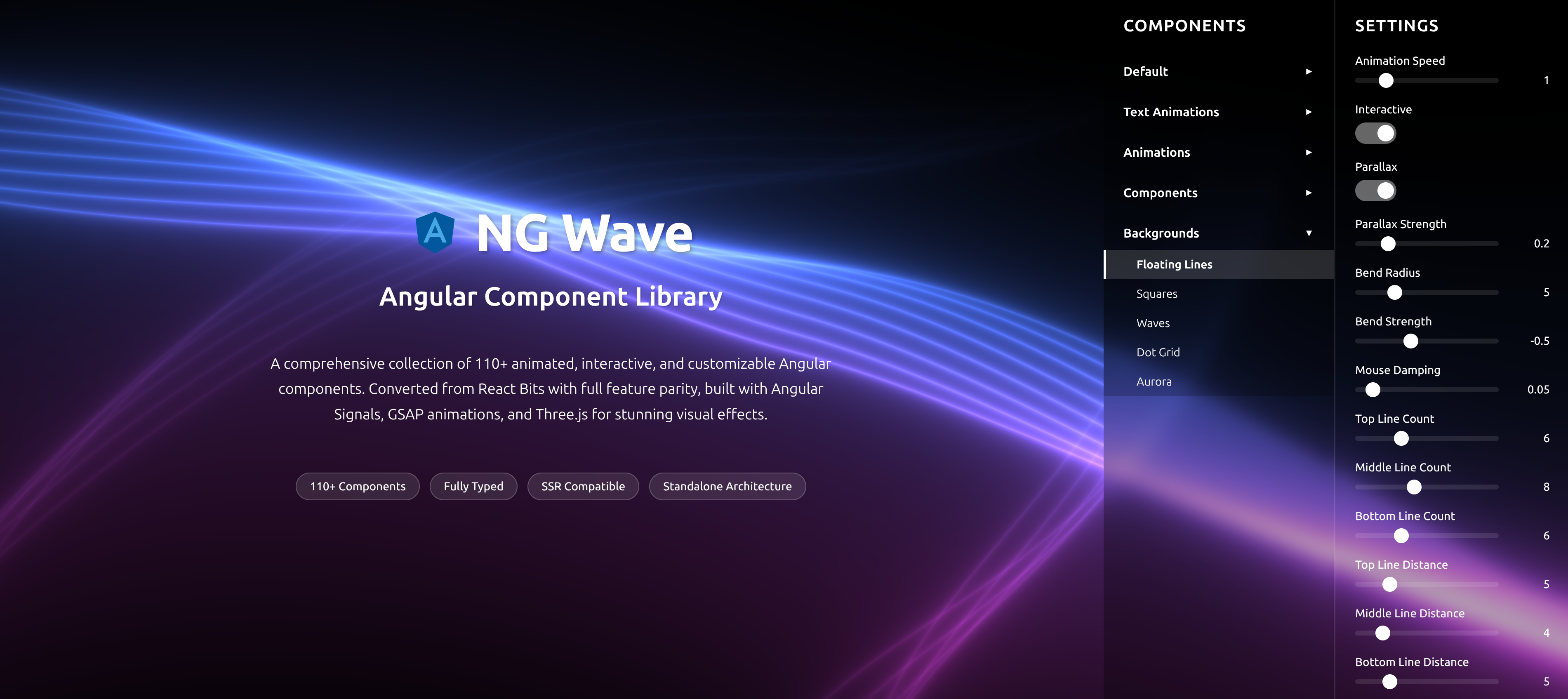
NG Wave
Angular Component Library
A comprehensive collection of 110+ animated, interactive, and customizable Angular components. Converted from React Bits with full feature parity, built with Angular Signals, GSAP animations, and Three.js for stunning visual effects.
Explore Components