Chronicle’s Angular 13→20 Upgrade While Shipping Weekly: Signals, Nx, and a Parallel Release Train
A real case study of upgrading across 3+ major Angular versions without freezing features—Signals + SignalStore bridge, Nx migrate, CI guardrails, and measurable outcomes.
“We shipped eight features while upgrading across three major Angular versions—without a single Sev‑1.” — Chronicle PMBack to all posts
The Feature Train Can’t Stop: Chronicle’s Angular 13→20 Leap
As companies plan 2025 Angular roadmaps, this is the pattern I recommend when you need to upgrade across multiple majors without derailing product.
The scene
I’ve been in this movie at a global entertainment company, a broadcast media network, and Charter: leadership wants a major Angular upgrade while product insists on shipping weekly. Chronicle (a media-tech enterprise) was stuck on Angular 13 with brittle zone-based change detection, RxJS patterns everywhere, and hard-pinned UI libs. They needed Angular 20 for Signals, better DX, and security updates—but could not pause delivery.
Angular 13 monorepo, 40+ libs, NgRx-heavy state
PrimeNG + Angular Material mix with custom themes
Weekly business commitments—no feature freeze allowed
Constraints
The ask: upgrade 13→16→17→20 in one program, maintain feature velocity, and avoid “big bang” risk. That’s the kind of challenge where a senior Angular consultant earns their keep.
3+ major versions to cross
Shared libraries consumed by multiple teams
Strict uptime SLOs, auditable rollbacks
Why Angular Teams Stall on Multi-Version Upgrades
Common blockers
In enterprise dashboards (think a broadcast media network scheduling or Charter analytics), shared libraries become the blast radius. A single minor theming change can ripple across dozens of microfrontends. Teams freeze because they treat the upgrade as a single track instead of a parallel release train.
Shared libs break unknown consumers
RxJS-first stores resist Signals adoption
UI theming drifts after PrimeNG/Material updates
What’s at stake
Staying back on 13 means missing Signals, better builder performance, and modern SSR options. It also hurts recruiting; senior engineers expect modern Angular 20+ ergonomics.
Security patches and browser changes
Developer experience and hiring
Performance, SSR/hydration stability
Implementation: Parallel Upgrade Track Without Freezing Delivery
Here are the actual tools and snippets we used to make this safe and boring (the goal of upgrades):
# Nx + Angular core migrations executed on the upgrade track
nx migrate latest
pnpm install
nx migrate --run-migrations

# Target specific majors when required
gx update @angular/core@17 @angular/cli@17 --force
# then
ngx update @angular/core@20 @angular/cli@20 --force
# .github/workflows/ci.yml (excerpt)
name: CI
on: [push, pull_request]
jobs:
build-test:
runs-on: ubuntu-latest
strategy:
matrix:
channel: ["legacy-13", "upgrade-20"]
steps:
- uses: actions/checkout@v4
- uses: pnpm/action-setup@v3
with: { version: 9 }
- run: pnpm install --frozen-lockfile
- run: |
if [ "${{ matrix.channel }}" = "legacy-13" ]; then
pnpm nx run-many -t build,test --configuration=legacy
else
pnpm nx run-many -t build,test --configuration=upgrade
fi1) Establish the baseline and risks
We began by tightening the Nx graph and enabling TypeScript strict mode incrementally—library-by-library with a migration tag. We added contract tests on shared API clients so changes were caught before UI breaks surfaced.
Nx workspace health, TypeScript strictness toggled per lib
Contract tests on shared interfaces
Dep graph to identify upgrade order
2) Branch strategy: a true release train
The upgrade lived on upgrade/major with a nightly rebase from main. Every Friday, a ‘convergence build’ verified both lines could be merged if needed. This de-risked schedule and kept product shipping.
main: feature delivery
upgrade/major: 13→16→17→20 track
Nightly rebase + weekly ‘convergence build’
3) Signals bridge library
We created @chronicle/signals-bridge: small, typed adapters that expose Signals from existing Observables and NgRx selectors. New features used SignalStore; legacy code kept NgRx until teams had bandwidth.
Let new code use Signals + SignalStore now
Keep legacy RxJS stores until they’re ready
Typed adapters for deterministic tests
4) UI library alignment without UX regression
We standardized tokens (spacing, color, typography) and ran visual snapshots on top revenue screens. Accessibility AA checks caught contrast shifts introduced by theme changes.
PrimeNG + Material tokens mapped to design tokens
Visual regression snapshots per critical flow
Density controls for data-dense tables
5) CI guardrails and canaries
We added a CI matrix so the same PR validated on Angular 13 and Angular 20 builds. Risky behavior toggled with Firebase Remote Config. Sentry/Otel monitored regressions before expanding canaries.
Matrix builds for both tracks
Feature flags via Firebase Remote Config
Sentry + OpenTelemetry for error budgets
6) Observability and rollback
Every deploy emitted a version tag across GA4 and Sentry. If KPIs dipped, we could pin the environment to the previous artifact quickly—without blocking the upgrade track.
Version-tagged telemetry in GA4
SSR/hydration and CWV tracked in pre-prod
Instant revert to last known-good tag
Example: A Signals Bridge That Lets Features Move Now
// libs/signals-bridge/src/lib/from-rx.ts
import { computed, signal } from '@angular/core';
import { toSignal } from '@angular/core/rxjs-interop';
import { Observable } from 'rxjs';

export function fromObservable<T>(obs$: Observable<T>, initial: T) {
  // Stable initial value keeps SSR/tests deterministic
  const s = toSignal(obs$, { initialValue: initial });
  return s; // signal<T>
}

// Feature store built with SignalStore that can consume legacy selectors
import { signalStore, withState, withComputed } from '@ngrx/signals';

interface UserState { user?: { id: string; role: string }; loading: boolean }
const initialState: UserState = { user: undefined, loading: true };

export const UserStore = signalStore(
  { providedIn: 'root' },
  withState(initialState),
  withComputed((store) => ({
    isAdmin: computed(() => store.user()?.role === 'admin'),
  }))
);

// In a feature component
// const user$ = ngrxSelectors.selectUser$(...);
// const userSig = fromObservable(user$, { id: '', role: 'guest' });
// store.patchState({ user: userSig() });
// Example: feature flag with Firebase Remote Config
import { inject } from '@angular/core';
import { RemoteConfig, getBoolean } from '@angular/fire/remote-config';
export function isNewTableEnabled() {
const rc = inject(RemoteConfig);
return getBoolean(rc, 'feature_new_table');
}Typed adapters and SignalStore
This pattern let us ship new feature code with Signals while the rest of the app remained unchanged, similar to what I’ve done stabilizing vibe‑coded apps and during United’s kiosk refactors.
Keep SSR deterministic with stable initial values
No need to rewrite every selector at once
When to Hire an Angular Developer for Legacy Rescue
If you need a remote Angular developer who can keep features moving while crossing multiple majors, this is exactly the engagement I run through AngularUX and gitPlumbers to stabilize your Angular codebase.
Signals you need help now
If any of these sound familiar, bring in an Angular expert who has done it at scale. At a global entertainment company and Charter, the parallel track plus guardrails turned upgrades from high-drama events into routine engineering work.
You’re >2 majors behind and shipping weekly
Shared libs break consumers you can’t see
CI takes >25 minutes or is flaky
How an Angular Consultant Approaches Signals Migration
Step-by-step
My playbook: introduce a Signals bridge and SignalStore for new code, convert hot paths first (tables, schedulers, charts), and instrument everything. For Chronicle’s analytics screens, we used data virtualization and moved expensive pipes into computed signals, cutting CD cycles by ~30%.
Bridge first, rewrite later
Measure change detection before/after
Protect tables and schedulers with virtualization
UI polish still matters
For enterprise dashboards (a broadcast media network VPS and Charter ads taught me this), a visually consistent token system and keyboard support reduce support burden. We validated AA contrast and navigation patterns before flipping flags.
Density, tokens, accessibility AA, and keyboard nav
PrimeNG + Angular Material harmonized
Measurable Results and What to Instrument Next
If you’re planning a 2025 upgrade and want a boring, measurable path, I’m available as a contract Angular developer to lead or pair with your team.
Outcomes we recorded
Chronicle crossed 13→20 in 9 weeks, maintained the release cadence, and avoided a feature freeze. Similar to my IntegrityLens and SageStepper products, we tracked improvements with Angular DevTools, Lighthouse, GA4, and Sentry, not just gut feel.
8 features shipped during the program
99.98% uptime; 0 Sev‑1 regressions
CI time reduced from 24m → 14m
Change detection cycles down ~30% on hot routes
Instrument next
Keep the guardrails. Treat upgrades as a continuous capability, not a project. The release train remains for future majors.
Hydration metrics on critical routes
Error budgets per team via SLOs
Automated design token drift checks
Questions to Assess Your Upgrade Readiness
Quick self-check
If not, that’s your starting list.
Do you have a parallel branch and matrix CI?
Can you toggle risky UX with feature flags?
Are Signals available to new features today?
Do you have contract tests for shared libs?
Key takeaways
- Run a parallel upgrade track—don’t freeze feature delivery.
- Introduce a Signals + SignalStore bridge to de-risk gradual adoption.
- Matrix CI and contract tests protect shared libraries across versions.
- Use feature flags (Firebase Remote Config) to decouple deploy from release.
- Track UX and stability with Lighthouse, Angular DevTools, Sentry, and GA4.
Implementation checklist
- Inventory libs, builders, and polyfills; map breaking changes by version.
- Create an Nx ‘upgrade’ branch with nightly rebase onto main.
- Add a Signals bridge library so features can opt-in incrementally.
- Stand up matrix CI (old vs. new) and contract tests for shared libs.
- Gate risky paths with Firebase Remote Config feature flags.
- Run visual regression and accessibility checks on critical flows.
- Instrument SSR/hydration and Core Web Vitals in pre-prod.
- Define rollback plan with tagged releases and environment pinning.
- Hold 2x weekly mob sessions to resolve cross-team blockers.
- Publish internal upgrade notes and code mods as schematics.
Questions we hear from teams
- How long does a multi‑version Angular upgrade take while shipping features?
- For Chronicle, Angular 13→20 took 9 weeks with weekly releases. Typical range: 4–10 weeks depending on libraries and test coverage. I start with a 1‑week assessment and deliver a plan, CI matrix, and the Signals bridge so features can move immediately.
- What does an Angular consultant actually do on an upgrade?
- I set up the parallel upgrade track, build typed Signals + SignalStore bridges, align UI tokens, harden CI/CD, and add observability. I also pair with your team on high‑risk refactors and write scripts/schematics to make repeatable progress.
- Can we avoid a feature freeze during the upgrade?
- Yes. Run a parallel upgrade branch with nightly rebases and a weekly convergence build. Use feature flags to decouple deploy from release and canary risky changes. This keeps the feature train rolling while the framework catches up.
- How much does it cost to hire an Angular developer for this?
- Most engagements are fixed‑scope for assessment plus a time‑boxed implementation. Teams typically budget 4–8 weeks of senior Angular engineering. I’m a remote Angular consultant and can start with a 30‑minute code review to scope accurately.
- Do we need to move everything to Signals immediately?
- No. Use a Signals bridge to let new code adopt Signals and SignalStore now, while legacy NgRx or RxJS stores migrate later. This avoids high‑risk rewrites and keeps SSR/tests deterministic with stable initial values.
Ready to level up your Angular experience?
Let AngularUX review your Signals roadmap, design system, or SSR deployment plan.
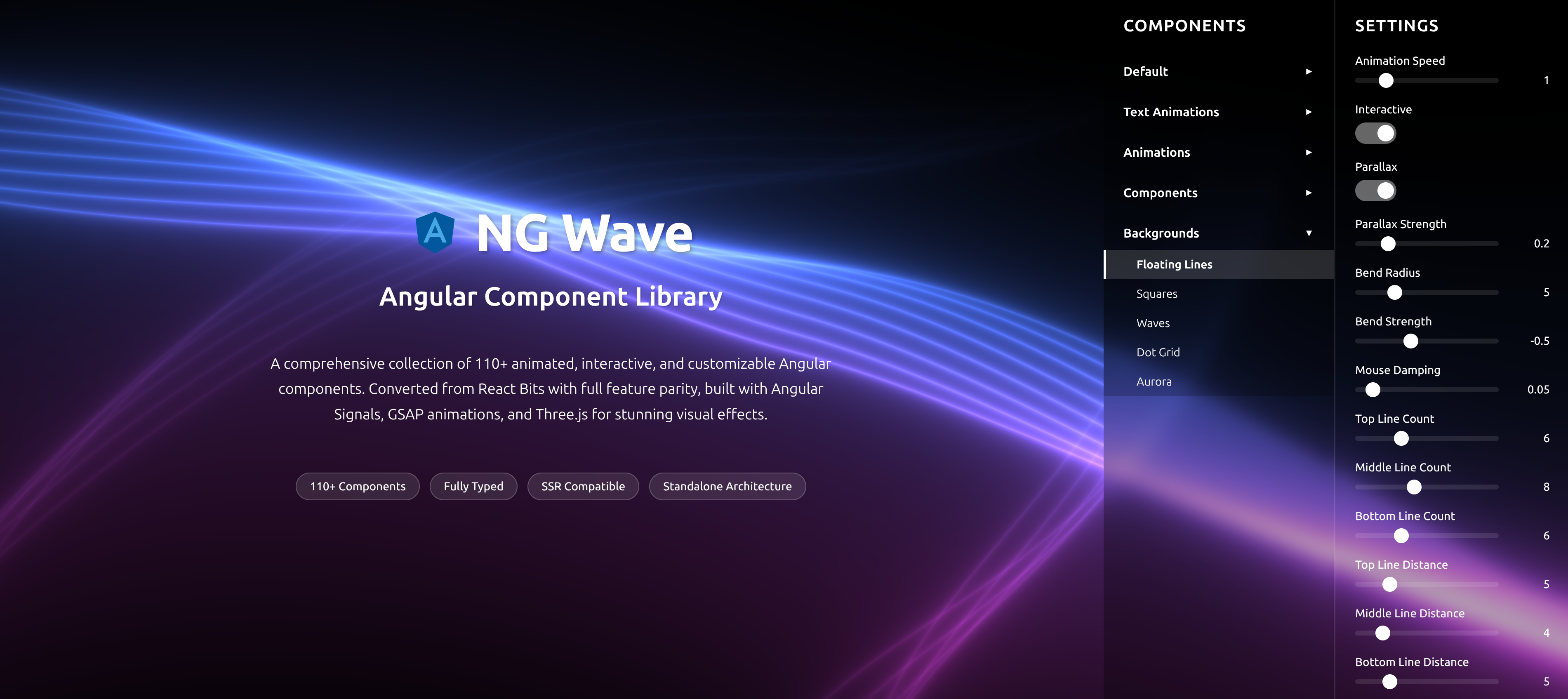
NG Wave
Angular Component Library
A comprehensive collection of 110+ animated, interactive, and customizable Angular components. Converted from React Bits with full feature parity, built with Angular Signals, GSAP animations, and Three.js for stunning visual effects.
Explore Components