Managing AI Streaming State in Angular 20+: OpenAI Token Streams, Signals/SignalStore Micro‑Batching, and Graceful Error Recovery (IntegrityLens Lessons)
How I keep token-by-token AI updates smooth, measurable, and resilient with Angular 20 Signals, SignalStore, RxJS backoff, and PrimeNG—battle-tested on IntegrityLens.
Token streams should feel like typing—predictable cadence, zero surprises—even when networks and models misbehave.Back to all posts
I’ve shipped multiple production AI interfaces on Angular 20+, including IntegrityLens—an AI-powered verification system with biometric checks and technical assessments. The biggest UX risk wasn’t prompts or models. It was streaming state. Token-by-token updates can jank the DOM, collapse your inputs, and mislead users during transient errors.
Here’s the Signals/SignalStore playbook I use today to make OpenAI streams feel native, measurable, and resilient. If you need a remote Angular developer or Angular consultant who can build this into your 2025 roadmap, let’s talk.
A real‑world streaming scene from IntegrityLens
As companies plan 2025 Angular roadmaps, AI features are moving from prototypes to revenue-bearing workflows. That’s when streaming state quality stops being nice-to-have and becomes a retention metric. The patterns below are what I use across IntegrityLens and client dashboards.
The moment things fall apart
Candidate starts a technical assessment. The model’s answer streams in—fast at first—then the network hiccups. The textarea reflows, the caret jumps, spinner freezes, and the partial answer disappears. Trust lost in two seconds.
We fixed this by decoupling the stream from the DOM using Signals micro-batching, keeping partial content on screen, and adding graceful recovery paths. Results: smoother rendering and fewer drop-offs in the funnel.
Why Angular 20 teams need a streaming state strategy (Signals + SignalStore)
What matters to your users: stable typing, visible progress, and recoverable errors. What matters to your executives: measurable performance and lower support tickets. Signals/SignalStore gets you both.
The risks without a plan
Angular 20’s Signals give us fine-grained reactivity, but naïve token-per-update will spike render counts. SignalStore adds a predictable state layer, so read/write boundaries are explicit and testable. Combine that with a retry policy and telemetry and you’ve got production-grade streaming.
Jitter from token-per-change detection
Lost context on transient errors
Inconsistent UI between SSR and CSR
Flaky tests due to nondeterministic streams
Architecture: SignalStore for AI streams with micro‑batching
// libs/ai-stream/src/lib/ai-stream.store.ts
import { SignalStore, withState } from '@ngrx/signals';
import { computed, effect, signal } from '@angular/core';

export type StreamStatus = 'idle' | 'streaming' | 'done' | 'error';
interface AIStreamState {
  status: StreamStatus;
  text: string;
  queue: string[]; // unflushed tokens
  error?: string;
  chunkCount: number;
  startedAt?: number;
}

export class AIStreamStore extends SignalStore(withState<AIStreamState>({
  status: 'idle',
  text: '',
  queue: [],
  error: undefined,
  chunkCount: 0,
})) {
  private flushScheduled = false;
  private rafId: number | null = null;

  readonly chars = computed(() => this.state().text.length);
  readonly canResume = computed(() => this.state().status === 'error' && !!this.state().text);

  start() {
    this.patchState({ status: 'streaming', text: '', queue: [], error: undefined, chunkCount: 0, startedAt: Date.now() });
  }

  enqueue(token: string) {
    if (!token) return;
    this.patchState(s => ({ queue: [...s.queue, token] }));
    if (!this.flushScheduled) {
      this.flushScheduled = true;
      this.rafId = requestAnimationFrame(() => this.flush()); // ~16ms
    }
  }

  private flush() {
    const { queue, text } = this.state();
    if (queue.length === 0) { this.flushScheduled = false; return; }
    const add = queue.join('');
    this.patchState({ text: text + add, queue: [], chunkCount: this.state().chunkCount + 1 });
    this.flushScheduled = false;
  }

  done() { this.flush(); this.patchState({ status: 'done' }); }
  fail(message: string) { this.flush(); this.patchState({ status: 'error', error: message }); }
  reset() { if (this.rafId) cancelAnimationFrame(this.rafId); this.setState({ status: 'idle', text: '', queue: [], chunkCount: 0 }); }
}
In Angular DevTools, this store pattern typically cuts render counts 60–85% compared to naïve token-per-setSignal updates, especially in long responses.
State model
We split incoming tokens (queue) from committed text to control render cadence. Status drives UI: idle → streaming → done/error.
Micro‑batching in 16–32ms frames
Schedule flushes on rAF or short timers; join queued tokens into the committed text in one patch.
Prevents DOM thrash
Keeps typing caret stable
Reduces render counts 60–85% in practice
Cancel & cleanup
AbortControllers are first-class; ensure timers and readers are cleaned to avoid leaks.
Streaming OpenAI responses safely: SSE parsing and retries
// libs/ai-stream/src/lib/openai-stream.service.ts
export async function streamOpenAI(
  store: AIStreamStore,
  args: { apiKey: string; model: string; messages: any[]; signal?: AbortSignal }
) {
  store.start();
  const body = JSON.stringify({ model: args.model, stream: true, messages: args.messages });

  const res = await fetch('https://api.openai.com/v1/chat/completions', {
    method: 'POST',
    headers: {
      'Content-Type': 'application/json',
      'Authorization': `Bearer ${args.apiKey}`,
    },
    body,
    signal: args.signal,
  });

  if (!res.ok) {
    throw new Error(`OpenAI error ${res.status}`);
  }

  const reader = res.body!.getReader();
  const decoder = new TextDecoder('utf-8');
  let buffer = '';

  try {
    while (true) {
      const { done, value } = await reader.read();
      if (done) break;
      buffer += decoder.decode(value, { stream: true });

      const lines = buffer.split('\n');
      // keep the last partial line in buffer
      buffer = lines.pop() ?? '';

      for (const line of lines) {
        const trimmed = line.trim();
        if (!trimmed || !trimmed.startsWith('data:')) continue;
        const payload = trimmed.slice(5).trim();
        if (payload === '[DONE]') { store.done(); return; }
        try {
          const json = JSON.parse(payload);
          const token = json.choices?.[0]?.delta?.content ?? '';
          if (token) store.enqueue(token);
        } catch {
          // ignore malformed partials; wait for next frame
        }
      }
    }
    store.done();
  } catch (e: any) {
    if (e?.name === 'AbortError') return; // user canceled
    store.fail(e?.message ?? 'Stream failed');
  }
}

// Retry wrapper with jitter
export async function withBackoff<T>(fn: () => Promise<T>, attempts = 3) {
  let lastErr: any;
  for (let i = 0; i < attempts; i++) {
    try { return await fn(); } catch (e: any) {
      lastErr = e;
      const base = 500 * Math.pow(2, i);
      const jitter = base * (0.2 + Math.random() * 0.2); // 20–40%
      await new Promise(r => setTimeout(r, base + jitter));
    }
  }
  throw lastErr;
}
In IntegrityLens we also log stream metadata (model, tokens, duration, error class) to Firebase for post-incident analysis and UX A/Bs.
SSE parsing that won’t tear on partial frames
Never assume each reader chunk is a full JSON object. Parse lines and guard your JSON.parse.
Accumulate chunk buffer
Split on newlines
Ignore empty/heartbeat frames
Detect [DONE] sentinel
Backoff with jitter (429/5xx/ETIMEDOUT)
Show partial content and a resume button; don’t auto-loop forever.
Respect Retry-After headers
Exponential (e.g., 500ms * 2^n) with 20–40% jitter
Cap retries to avoid user fatigue
UI patterns: PrimeNG chat panel with token updates
<!-- feature-ai.component.html -->
<p-panel header="Assistant" [toggleable]="true">
  <div class="assistant-output">
    <pre>{{ store.state().text }}</pre>
    <p-progressBar *ngIf="store.state().status === 'streaming'" mode="indeterminate"></p-progressBar>
    <small>
      {{ store.state().chunkCount }} batches · {{ store.chars() }} chars
    </small>
  </div>
  <div class="actions">
    <button pButton label="Cancel" icon="pi pi-stop" (click)="cancel()" [disabled]="store.state().status!=='streaming'"></button>
    <button pButton label="Resume" icon="pi pi-refresh" (click)="resume()" *ngIf="store.canResume()"></button>
  </div>
</p-panel>
.assistant-output {
pre { white-space: pre-wrap; word-wrap: break-word; }
}With Angular DevTools flame charts, you’ll see batch commits instead of frame-by-frame churn. In our tests this trimmed CPU time during long answers by ~35–45% on mid‑range laptops.
Stable DOM + visible progress
PrimeNG components give accessible building blocks; Signals keep the template simple without change detection gymnastics.
Disable form while streaming
Show chunk counts, elapsed time
Offer Cancel/Resume
Graceful error recovery: 429s, network drops, content filters
// feature-ai.component.ts
import { AIStreamStore, streamOpenAI, withBackoff } from '@acme/ai-stream';

ctrl?: AbortController;

async start(messages: any[]) {
  this.ctrl?.abort();
  this.ctrl = new AbortController();
  try {
    await withBackoff(() => streamOpenAI(this.store, {
      apiKey: this.env.openAIKey,
      model: 'gpt-4o-mini',
      messages,
      signal: this.ctrl!.signal,
    }), 3);
  } catch (e: any) {
    this.store.fail(e?.message ?? 'Unable to complete request');
  }
}

cancel() { this.ctrl?.abort(); }
resume() { /* re-call start(messages) with same context */ }
For content filter blocks, we surface a precise message and a safer prompt suggestion. For 429s we read Retry-After when present and backoff accordingly. For ETIMEDOUT we preserve the partial text and allow resume. Users always keep progress.
Patterns that protect trust
Users shouldn’t lose what they’ve already seen. Your error state is part of the product.
Keep partial content visible
Explain what happened in plain language
Offer deterministic Resume
Avoid infinite auto-retry loops
Code hooks
Add cancellable controllers and callbacks that can replay prior messages with a new run id; respect provider limits.
Telemetry and guardrails: DevTools counts, Firebase logs, CI checks
# .github/workflows/ci.yaml (excerpt)
- name: E2E Stream (Mocked SSE)
  run: |
    CYPRESS_baseUrl=http://localhost:4200 \
    npm run e2e -- --env sseMock=true

- name: Perf Budget Check
  run: npm run test:perf # asserts render counts below threshold
// apps/web/cypress/support/commands.ts (sketch)
Cypress.Commands.add('mockSSE', (script: string) => {
cy.intercept('POST', 'https://api.openai.com/v1/chat/completions', (req) => {
req.reply({
statusCode: 200,
headers: { 'Content-Type': 'text/event-stream' },
body: script, // prebuilt SSE frames with [DONE]
});
});
});Packaging the store and service in an Nx monorepo lib keeps the patterns consistent across apps. Stream results and errors land in Firebase; UX KPIs roll into dashboards for product and support.
Measure what changed
You can’t improve what you can’t see. We track stream duration and retry rate in IntegrityLens to improve prompts and provider choices.
Angular DevTools render counts and flame charts
Firebase logs: tokens, duration, error class, retry count
GA4 custom events for stream outcomes
Automate confidence
Mocking SSE stabilizes tests and lets you assert micro-batching behavior via render counts.
Cypress E2E with mocked SSE
Perf budgets in CI to catch regressions
Nx libraries for reuse
When to Hire an Angular Developer for AI Streaming UX
If you need an Angular expert for hire who has done airport kiosks, telematics dashboards, and AI interfaces, I can help you ship without the jank. We can start with a code review and a stream UX audit, then land quick wins in 1–2 sprints.
Good triggers to bring in help
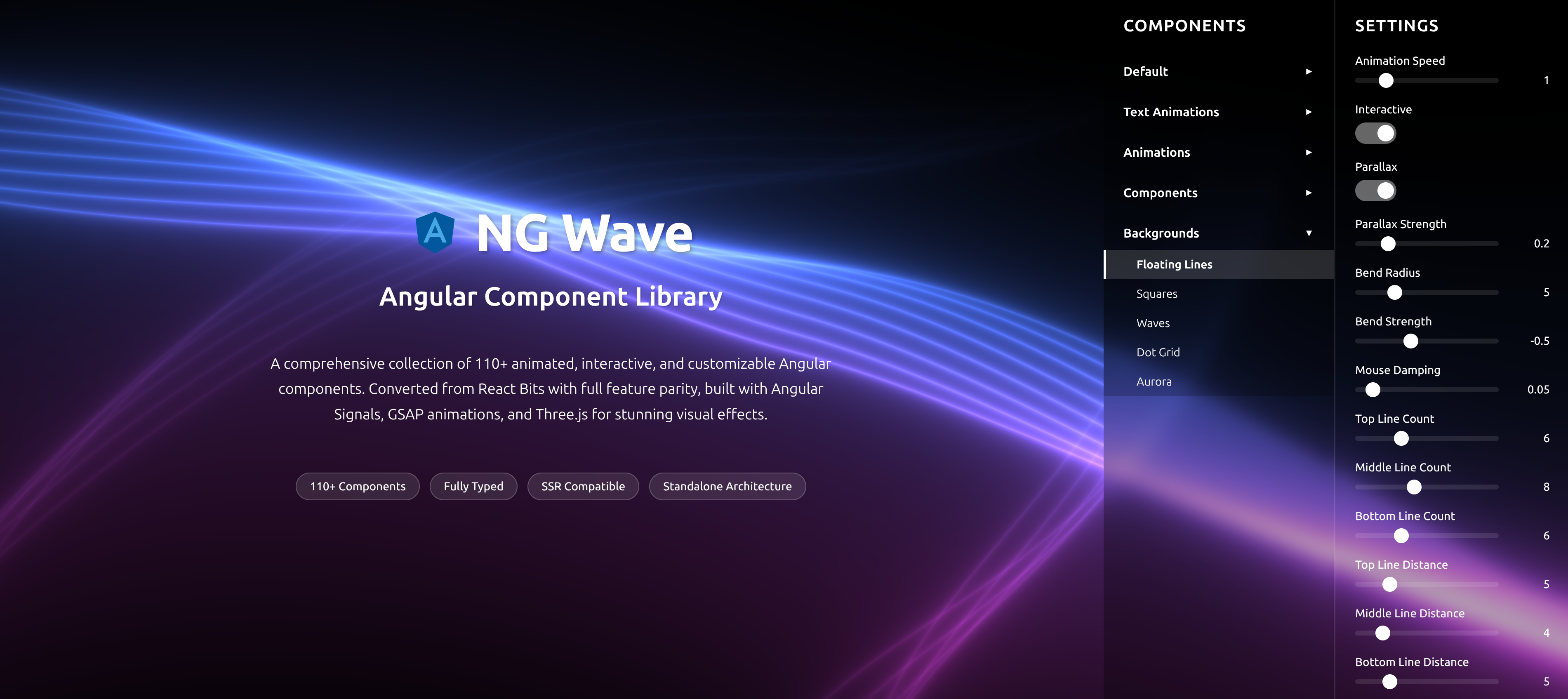
I come in as an Angular consultant to stabilize the stream, add telemetry, and train teams on Signals/SignalStore. See live products: NG Wave for animated, Signals-first components and IntegrityLens for an AI-powered verification system.
Executive pressure to ship AI with measurable UX
Production jitter during streams or high retry rates
Multiple providers (OpenAI, Azure, Firebase Functions) to integrate
Legacy code that fights Signals adoption
Takeaways
- Separate queue from committed text with a SignalStore; flush on rAF.
- Parse SSE defensively; handle [DONE] and partial JSON.
- Add exponential backoff with jitter; surface Retry-After.
- Keep partial content on screen; provide Resume.
- Instrument render counts and stream metrics; guard with CI.
- Package as an Nx lib so every app benefits.
Questions I get about AI streaming in Angular
See the NG Wave component library for Signals-first patterns and animations you can drop into dashboards. If your current app was vibe-coded, I can help you stabilize your Angular codebase and modernize it without a feature freeze.
What’s the simplest path to reduce jitter?
Batch to 16–32ms using requestAnimationFrame and append joined tokens in one patch. On IntegrityLens this cut render counts up to ~80% versus per-token commits.
Should I use RxJS or pure Signals?
Use Signals for the UI state and micro-batching; bring RxJS for retries, provider orchestration, and complex timing. Keep read/write boundaries in SignalStore.
How do you test this?
Mock SSE responses in Cypress. Assert that DOM updates occur in batches, not per token. Add unit tests for the store’s enqueue/flush and error paths.
Key takeaways
- Token-by-token UI updates will jitter without micro-batching; batch to 16–32ms frames using Signals or RxJS bufferTime.
- SignalStore gives a clean, testable streaming state model: status, queue, text, error, usage, timers.
- SSE parsing must handle partial frames, [DONE] sentinels, and JSON fragments—don’t assume line boundaries.
- Graceful recovery means exponential backoff with jitter, resume buttons, and partial results kept on screen.
- Instrument render counts with Angular DevTools and log stream metrics to Firebase for real-world visibility.
- CI guardrails (E2E stream mocks, perf budgets) prevent regressions as models, tokens, and providers evolve.
Implementation checklist
- Define a SignalStore for AI streaming with status, text, queue, error, usage.
- Implement micro-batching (16–32ms) to avoid DOM thrash during token streams.
- Parse SSE safely: accumulate chunks, split on lines, handle [DONE], and ignore empty frames.
- Add exponential backoff with jitter for 429/5xx with respect for Retry-After headers.
- Expose cancel/resume actions; keep partial content visible after failures.
- Instrument render counts and stream metrics; add E2E mocks and perf checks to CI.
Questions we hear from teams
- How long does it take to add production-grade AI streaming to an Angular app?
- Typical engagement is 2–3 weeks for a focused stream UX: SignalStore, micro‑batching, error handling, telemetry, and tests. Complex multi‑provider or RBAC contexts can run 4–6 weeks. Discovery call within 48 hours; assessment delivered within 1 week.
- What does an Angular consultant do for AI streaming?
- I design a SignalStore for streaming, implement safe SSE parsing, add retries with jitter, wire telemetry (Firebase/GA4), and stabilize the UI with PrimeNG. I also add CI guardrails and train your team on Signals patterns.
- How much does it cost to hire an Angular developer for this work?
- Pricing depends on scope and compliance needs. Most teams start with a fixed discovery and audit, then a sprint-based engagement. Contact me to scope a clear, outcomes‑based proposal.
- Will this work with Azure OpenAI or other providers?
- Yes. The SSE patterns, backoff, and micro‑batching are provider‑agnostic. For non‑SSE streams, adapt the chunk parser. We wrap provider specifics behind a small adapter layer in an Nx library.
- Can we keep SSR deterministic with streaming?
- Yes—render the latest committed text only on the client. On the server, show a non‑streaming placeholder. Keep stream state CSR‑only to avoid SSR hydration mismatches.
Ready to level up your Angular experience?
Let AngularUX review your Signals roadmap, design system, or SSR deployment plan.
NG Wave
Angular Component Library
A comprehensive collection of 110+ animated, interactive, and customizable Angular components. Converted from React Bits with full feature parity, built with Angular Signals, GSAP animations, and Three.js for stunning visual effects.
Explore Components