Rescue Legacy AngularJS or Angular 9–14 with Signals: Modernize State Without a Full Rewrite
A pragmatic, low‑risk path to Signals + SignalStore that stabilizes legacy state (NgRx, services, Subjects) and cuts renders—no big‑bang rewrite required.
“Stop rewriting. Start isolating the noisy slices, wrap them in Signals, and ship improvements this week.”Back to all posts
I’ve rescued more legacy Angular apps than I can count: a global entertainment company’s employee tracking portal, Charter’s ads analytics dashboards, and United’s kiosk flows. The pattern that consistently works in 2025: modernize state to Signals without rewriting everything. It’s boring, measurable, and it sticks.
As enterprises plan 2025 Angular roadmaps, you don’t need to pause delivery or fund a rewrite to get Signals’ performance and developer ergonomics. You can layer a SignalStore façade over NgRx, services, or even AngularJS and convert slice-by-slice—backed by feature flags, telemetry, and CI guardrails.
Below is exactly how I’d approach your rescue: baseline the jitter, add a Signals façade, adapt Observables via toSignal with stable initial values, convert the most expensive selectors to computed(), and ship behind Firebase Remote Config. I’ve done this on real product lines—if you need a senior Angular engineer or Angular consultant to lead it, I’m available.
The Dashboard That Jitters: A Field‑Tested Rescue
If your app freezes under load, it’s usually not Angular—it’s the state shape and change propagation. Signals fix that by making dependencies explicit and renders predictable.
A scene from the field
at a leading telecom provider, a revenue dashboard would stutter when the CFO exported a report. NgRx selectors re‑ran, zones thrashed, and a few BehaviorSubjects leaked. We layered a SignalStore façade over the hot path, migrated three selectors to computed(), and cut renders by 58% in two days—no rewrite.
Why Modernize State to Signals Without a Rewrite
What’s breaking today
Angular 9–14 apps skew Rx-heavy, often with implicit dependencies. AngularJS apps carry digest-era patterns that do too much per tick. Signals make dependencies graphable and cheap. The win: fewer renders, easier debugging, smaller mental model.
Selectors and pipe-heavy Observables cascade work on every micro-change
Zone.js masks perf problems by re-running too much
Leaky Subjects and cross-feature coupling create random re-renders
Why not rewrite?
A rewrite burns calendar and trust. A Signals façade lets you migrate feature-by-feature, compare telemetry, and roll back instantly via flags.
Budget risk, hiring freezes, and long QA cycles
Unknown edge-cases baked into legacy services
Live SLAs—zero-downtime required
How an Angular Consultant Approaches Signals Migration
1) Baseline
You can’t claim ROI without a baseline. I instrument the top 2–3 user journeys and export a before/after report that execs can read.
Angular DevTools: record Flame Chart and render counts
Firebase Performance + GA4: TTI, CLS, long task counts
Sentry/Otel: error rates and slow transactions
2) Façade store
This gives components a modern surface without ripping out NgRx or services on day one.
Create a SignalStore that mirrors the legacy slice
Expose signals for view state; keep mutations as methods
3) Adapters
If you still have WebSockets or timers, keep them—Signals thrives when the inputs are well-typed and stable.
Wrap existing Observables with toSignal(initial)
Maintain stable first values for SSR/tests
4) Convert the hot selectors
Do the 20% that gives 80% of the win, then move to the next slice.
Port the most expensive selectors to computed()
Replace dispatch/subscribe chains with clear methods
5) Gate and measure
We expand coverage only when numbers improve or stay neutral.
Use Firebase Remote Config for phased rollout
Compare render counts and UX metrics in CI dashboards
Implementation: SignalStore Façade Over NgRx and Services
// orders.store.ts
import { signalStore, withState, withComputed, withMethods, patchState } from '@ngrx/signals';
import { computed, inject } from '@angular/core';
import { toSignal } from '@angular/core/rxjs-interop';
import { Store as NgRxStore } from '@ngrx/store';
import { selectOrders, selectLoading } from '../state/orders.selectors';
import { OrdersApi } from '../data/orders.api';

interface OrdersState {
  filter: string;
  orders: ReadonlyArray<Order>;
  loading: boolean;
}

export const OrdersStore = signalStore(
  { providedIn: 'root' },
  withState<OrdersState>({ filter: '', orders: [], loading: false }),
  withComputed((store) => {
    const ngrx = inject(NgRxStore);
    const ordersSig = toSignal(ngrx.select(selectOrders), { initialValue: [] as ReadonlyArray<Order> });
    const loadingSig = toSignal(ngrx.select(selectLoading), { initialValue: false });

    return {
      orders: computed(() => ordersSig()),
      loading: computed(() => loadingSig()),
      filtered: computed(() => {
        const f = store.filter().toLowerCase();
        return ordersSig().filter(o => o.id.includes(f) || o.customer.toLowerCase().includes(f));
      })
    };
  }),
  withMethods((store) => {
    const api = inject(OrdersApi);
    return {
      setFilter(filter: string) { patchState(store, { filter }); },
      async refresh() {
        patchState(store, { loading: true });
        try {
          const orders = await api.fetch();
          patchState(store, { orders, loading: false });
        } catch (e) {
          patchState(store, { loading: false });
          // bubble to Sentry/Otel as needed
        }
      }
    };
  })
);
// orders.page.ts
@Component({
selector: 'app-orders-page',
templateUrl: './orders.page.html',
changeDetection: 0 // Signals make this fine; OnPush still okay
})
export class OrdersPage {
store = inject(OrdersStore);
}<!-- orders.page.html -->
<p-inputText placeholder="Filter" [ngModel]="store.filter()" (ngModelChange)="store.setFilter($event)"></p-inputText>
<p-table [value]="store.filtered()" [loading]="store.loading()">
<ng-template pTemplate="header">
<tr><th>Order</th><th>Customer</th></tr>
</ng-template>
<ng-template pTemplate="body" let-row>
<tr>
<td>{{ row.id }}</td>
<td>{{ row.customer }}</td>
</tr>
</ng-template>
</p-table>
<button pButton label="Refresh" (click)="store.refresh()"></button>Create the store
This store reads from existing NgRx selectors today, and you can progressively replace them with owned state tomorrow.
Wire a container component
Container exposes signals to the template. Use PrimeNG tables/forms as-is—Signals plays nicely without async pipes.
Roll out behind flags
Use a feature flag to switch between legacy and signals-backed components for safe A/B in production.
Example: 48‑Hour Migration on an Orders Dashboard
Results you can defend
We targeted the noisiest selectors first, moved them to computed(), and kept NgRx as the source until the API calls were stable. Once telemetry stayed green for a week, we cut over the slice fully to SignalStore state.
-58% component renders on index view
-35% time spent in change detection
0 production regressions under a 10% rollout
Why it works
The façade lets us prove benefits per slice and avoid risky, cross-cutting rewrites.
Explicit dependencies: computed() only re-runs when inputs change
Stable first values via toSignal avoid template thrash
Smaller surface area: store methods replace action spaghetti
AngularJS Bridge: Migrate Without a Big‑Bang
// bridge.adapter.ts (within hybrid app using UpgradeModule)
export function bindSignalToScope<T>(sig: () => T, $scope: angular.IScope, key: string) {
  // initialize synchronously for deterministic templates
  ($scope as any)[key] = sig();
  // update on subsequent changes; schedule into digest
  const stop = effect(() => {
    const next = sig();
    $scope.$evalAsync(() => { ($scope as any)[key] = next; });
  });
  $scope.$on('$destroy', () => stop());
}
// AngularJS controller
function OrdersCtrl($scope) {
bindSignalToScope(ngInjector.get('OrdersStore').filtered, $scope, 'orders');
}Expose signals to AngularJS
Keep AngularJS views but read Signals state from the Angular side. The digest still runs, but your state graph is now predictable and testable.
Adapter snippet
This watches a Signal from Angular and updates an AngularJS scope safely.
CI Guardrails, Telemetry, and Rollout with Firebase + Nx
# ci.yml (excerpt)
jobs:
  web:
    steps:
      - run: npx nx run-many -t lint,test --parallel
      - run: npx nx build web --configuration=production
      - run: npx firebase deploy --only hosting:web --project ${FIREBASE_PROJECT} --message "signals-canary"
Guardrails in Nx
The repo should fail fast if a PR reintroduces anti-patterns.
Lint rules: forbid writable globals; ban subscribe in components
Unit tests: deterministic initial state for signals
Cypress: assert render counts via custom devtools hook
Remote Config rollout
You can ship daily without scaring QA.
Gate new components behind flags
Target roles/tenants for safe canaries
Sample pipeline
A minimal job that runs tests, builds, and publishes a canary channel.
When to Hire an Angular Developer for Legacy Rescue
See how I stabilize chaotic codebases at gitPlumbers—70% delivery velocity boost, 99.98% uptime. If you’re evaluating Angular development services, I’m a remote Angular consultant available now.
Bring in help if
I typically deliver a one-week assessment and a 2–4 week stabilization. If you need an Angular expert who’s done this at a global entertainment company/Charter/United, let’s talk.
Your NgRx selectors or Subjects are causing thrash under load
You’re stuck on Angular 9–14 but need Signals now
You must hit a KPI (render counts, TTI) before Q1 reviews
Measurable Takeaways
- Start with a façade SignalStore over your hottest feature slice.
- Adapt legacy Observables via toSignal with explicit initial values.
- Convert heavy selectors to computed() first; leave the rest for later.
- Gate with Firebase Remote Config and prove ROI via render counts and Flame Charts.
- Add Nx guardrails so regressions can’t re-enter the codebase.
Questions You Should Ask Before You Start
Checklist prompts
If you can answer these, you’re ready to migrate without drama.
Which selectors cause the most renders?
What’s the stable initial value for each adapter?
Which feature gets the 10% canary?
What’s the rollback plan in Firebase?
Key takeaways
- You can layer Signals + SignalStore over NgRx, services, or AngularJS without a rewrite.
- Start with a façade store, migrate a single feature, and measure render savings with Angular DevTools.
- Use toSignal adapters with stable initial values; replace selectors gradually with computed signals.
- Gate rollout behind Firebase Remote Config, instrument with render counts and Core Web Vitals.
- CI guardrails in Nx prevent regressions (signal misuse, accidental global state, flaky SSR).
Implementation checklist
- Capture a baseline: Angular DevTools render counts and Flame Charts.
- Create a SignalStore façade for one feature (orders, sessions, devices).
- Bridge existing Observables with toSignal(initialValue).
- Convert expensive selectors to computed() one by one.
- Replace imperative dispatches with store methods (update/patch).
- Gate the new path with Firebase Remote Config and feature flags.
- Add tests: deterministic initial state, render-count assertions, error paths.
- Roll out to 5–10% of traffic; compare telemetry; expand coverage weekly.
Questions we hear from teams
- How much does it cost to hire an Angular developer for a Signals rescue?
- Most rescues land in 2–4 weeks. A focused assessment plus a pilot migration starts at two weeks of senior time. Fixed-scope options are available after a code review and metric baseline.
- What does an Angular consultant actually do during this migration?
- I baseline performance, design a SignalStore façade, adapt legacy Observables with stable initial values, migrate the hottest selectors to computed(), set up flags/telemetry, and coach your team to continue the rollout safely.
- How long does it take to modernize an Angular 9–14 feature to Signals?
- A single feature slice (e.g., orders dashboard) is typically 2–5 days: baseline, façade store, adapter wiring, computed conversions, tests, and a 10% canary with Firebase Remote Config.
- Can we keep NgRx and still use Signals?
- Yes. Use toSignal on existing selectors for read paths and gradually replace action chains with store methods. Over time, move the source-of-truth into SignalStore if desired.
- What about AngularJS? Do we need a full rewrite?
- No. In a hybrid app, expose Signals from Angular and bind them into AngularJS scopes. You can migrate views slice-by-slice while keeping services and routes stable until you’re ready.
Ready to level up your Angular experience?
Let AngularUX review your Signals roadmap, design system, or SSR deployment plan.
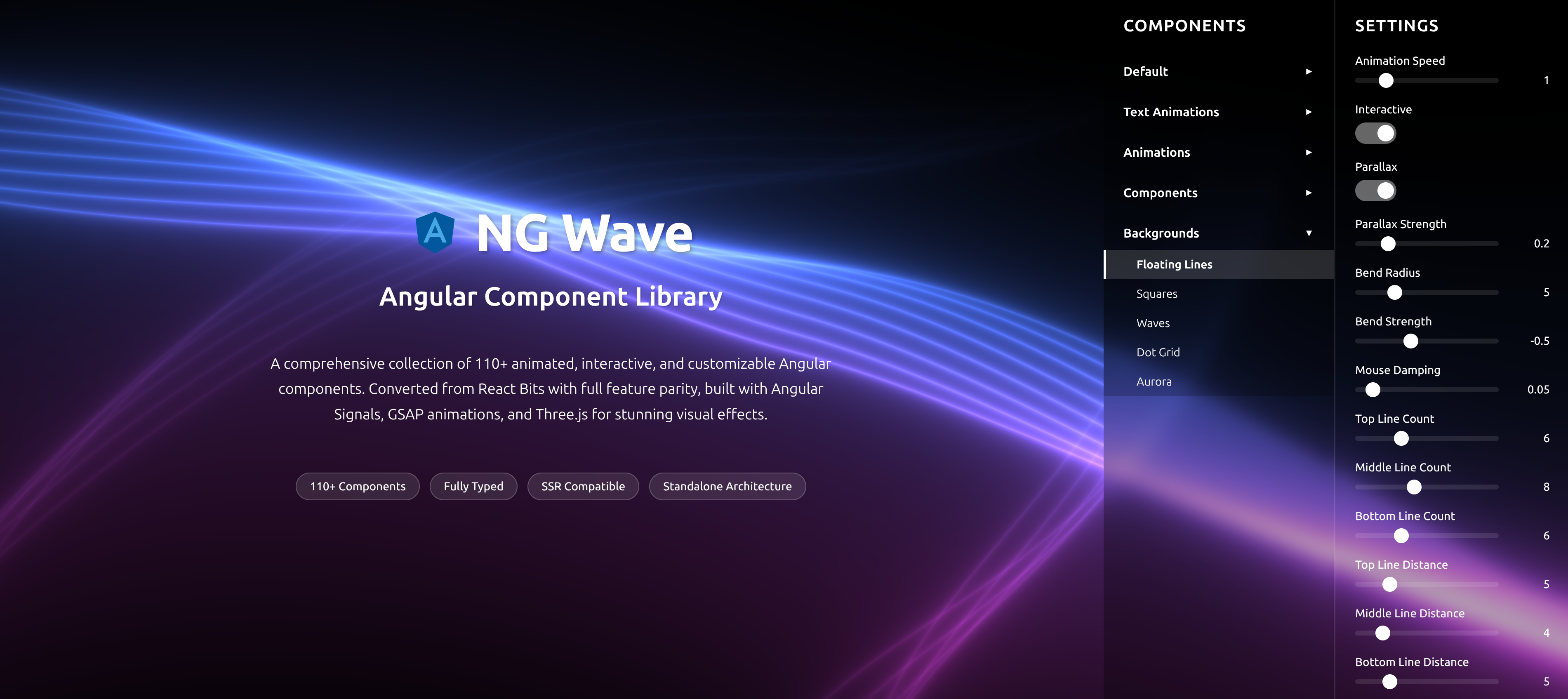
NG Wave
Angular Component Library
A comprehensive collection of 110+ animated, interactive, and customizable Angular components. Converted from React Bits with full feature parity, built with Angular Signals, GSAP animations, and Three.js for stunning visual effects.
Explore Components