Stabilizing AI‑Generated Angular 20+ Codebases Without Freezing Delivery: Three Case Studies
Ship while you fix. How I turned AI‑generated Angular into stable, measurable delivery with Signals/SignalStore, Nx, PrimeNG, and CI guardrails.
“AI can write components; your job is to add guardrails. Do that, and you’ll ship faster every week—not just the first week.”Back to all posts
Ship While You Fix: The AI‑Angular Reality
What I walked into
I’m Matthew Charlton. Over the last two years I’ve been brought in to stabilize AI‑generated Angular 20+ codebases for a major airline, a global entertainment company, and a leading telecom provider—without a feature freeze. The pattern was consistent: fast initial velocity from ChatGPT/Copilot, followed by jittery dashboards, memory leaks, and PRs stuck in review. My playbook combines Signals/SignalStore, Nx, PrimeNG, and CI guardrails so teams can keep shipping while we harden the foundation. If you need to hire an Angular developer or Angular consultant who can rescue and deliver, this is the work.
Why AI‑Generated Angular 20+ Apps Break in Production
Common failure modes I see on arrival
AI can scaffold components quickly, but it doesn’t infer organizational guardrails. Without Signals and a clear store boundary, change detection thrashes; without typed event schemas, dashboards jitter. The fix isn’t a rewrite—it’s targeted guardrails that make every subsequent feature safer.
Over‑rendering from component inputs + RxJS subscribe cascades (no Signals).
Implicit state via Subjects/services and accidental global singletons.
Circular deps from copy‑pasted providers and ‘barrel everything’ patterns.
Zone.js patchwork (detectChanges, setTimeout) to hide timing issues.
Real‑time streams without backpressure or typed events—jank and leaks.
flaky UI due to mismatched design primitives and no accessibility tokens.
Case Study 1: Advertising Analytics for a Leading Telecom Provider
Challenge
A real‑time campaign dashboard (PrimeNG + Highcharts) was built rapidly with AI assistance, then bogged down. Render counts spiked on minor interactions; memory grew during long sessions; PRs were slow due to full‑repo CI.
Angular 20 app scaffolded via AI; charts jittered on every filter change.
Unbounded WebSocket updates; manual detectChanges sprinkled across components.
CI ran full builds on every PR; reviewers saw different perf per run.
Intervention
We wrapped the hottest path in a SignalStore that owns stream lifecycles and exposes computed Signals for the view. We batched incoming points to 60ms windows (keeps INP stable), and typed every event from the socket. Nx split CI by affected projects, cutting noise and unblocking reviewers.
Introduced a ChartStore using SignalStore with typed events and micro‑batching.
Replaced Subjects with a typed Message union; added backoff with jitter.
Moved repo to Nx; implemented affected:build/test; added perf budgets.
Measurable results
We didn’t pause delivery; features continued behind flags while we stabilized the spine.
Render counts: −58% on the chart container; −41% on filter panel.
INP p75: 193ms → 116ms on interactive views; LCP unchanged.
CI time: 22m → 7m avg with affected + caching; PR cycle time −34%.
Crash‑free sessions (30‑day): 96.1% → 99.2% after memory leak fix.
Case Study 2: Insurance Telematics — Real‑Time Vehicles and Safe‑Driver KPIs
Challenge
An Angular 20+ telemetry portal streamed vehicle events (20–50k devices). The AI scaffolds looked “fine” but hid coupling and retry storms. Ops demanded stability without a feature freeze.
AI‑generated services duplicated connection logic; memory leaks after 45–60min.
Table virtualization missing; large fleet views locked the main thread.
Retry storms on network loss caused cascading failures across tabs.
Intervention
We consolidated streams into a FleetStore using computed Signals for KPIs. Summaries used stale‑while‑revalidate to stay snappy. Backoff/jitter plus BroadcastChannel leader election stopped retry storms. PrimeNG virtual scroll kept UI smooth under load.
SignalStore for fleet state; typed WebSocket events and SWR cache for summaries.
Exponential backoff with jitter; tab‑scoped leader election to avoid stampedes.
PrimeNG virtual scroll and cell templates for 60fps table scrolling.
Measurable results
The team shipped new KPIs while we stabilized core state—proof you can fix and deliver.
Dropped memory growth to linear and bounded; 0 leak regressions in 6 weeks.
Fleet view FPS: 24–30 → stable 55–60 on mid‑range laptops.
Error rate during network churn: −72%; crash‑free sessions: 99.6%.
No feature freeze—three features shipped via flags during the hardening phase.
Case Study 3: Global Entertainment — Employee Tracking and Payments
Challenge
A high‑visibility workforce portal had to keep launching weekly. AI‑generated code shipped features but accumulated debt that threatened audits and UX.
Standalone components mixed with legacy NgModule patterns from AI copy/paste.
Zone patchwork (detectChanges + setTimeout) to “fix” timing in payroll steps.
Design drift across screens; inconsistent accessibility and token usage.
Intervention
We moved step state into Signals, removed manual change detection, and introduced token‑driven theming to unify UX. Storybook + visual diffs caught regressions. Risky changes (zoneless mode, virtualScroll) rolled out behind flags for zero downtime.
Signals + SignalStore for multi‑step workflows; removed brittle zone patches.
Design tokens routed into PrimeNG themes; Storybook snapshots in CI.
Feature flags via remote config for risky toggles (zoneless, virtual scroll).
Measurable results
Executives care about outcomes. Shipping never stopped; metrics moved in the right direction.
Lighthouse Mobile: 76 → 92; INP p75: 210ms → 128ms on forms.
Accessibility issues (WCAG): −67% in two sprints.
Bug reopen rate: −43% with Storybook/Chromatic guardrails.
Weekly releases continued; zero missed payroll runs.
Implementation Playbook: Guardrails That Stabilize AI Code Fast
// SignalStore for a chart/fleet: typed events, micro-batching, safe teardown
import { signalStore, withState, withMethods, withComputed, patchState } from '@ngrx/signals';
import { computed, effect, signal } from '@angular/core';
import { webSocket, WebSocketSubject } from 'rxjs/webSocket';
import { filter, bufferTime, map, retryWhen, scan, delay } from 'rxjs/operators';

// 1) Typed event schema
export type Message =
  | { type: 'point'; series: string; x: number; y: number }
  | { type: 'summary'; kpi: string; value: number }
  | { type: 'heartbeat' };

interface ChartState {
  connected: boolean;
  points: Record<string, { x: number; y: number }[]>;
  kpis: Record<string, number>;
  error?: string;
}

export const ChartStore = signalStore(
  { providedIn: 'root' },
  withState<ChartState>({ connected: false, points: {}, kpis: {} }),
  withComputed(({ points, kpis }) => ({
    seriesNames: computed(() => Object.keys(points())),
    kpiList: computed(() => Object.entries(kpis()).map(([k, v]) => ({ k, v })))
  })),
  withMethods((store) => {
    let socket: WebSocketSubject<Message> | undefined;

    const connect = (url: string) => {
      if (socket) socket.complete();
      socket = webSocket<Message>(url);
      patchState(store, { connected: true, error: undefined });

      socket.pipe(
        // micro-batch to reduce render churn
        bufferTime(60),
        map((batch) => batch.filter(Boolean) as Message[]),
        // simple backoff with jitter for transient errors
        retryWhen((errors) =>
          errors.pipe(
            scan((acc) => Math.min(acc + 1, 5), 0),
            delay((attempt) => 200 * attempt + Math.random() * 200)
          )
        )
      ).subscribe({
        next: (batch) => {
          for (const msg of batch) {
            if (msg.type === 'point') {
              const curr = store.points()[msg.series] ?? [];
              const next = [...curr, { x: msg.x, y: msg.y }].slice(-2000);
              patchState(store, ({ points }) => ({ points: { ...points, [msg.series]: next } }));
            } else if (msg.type === 'summary') {
              patchState(store, ({ kpis }) => ({ kpis: { ...kpis, [msg.kpi]: msg.value } }));
            }
          }
        },
        error: (e) => patchState(store, { error: String(e), connected: false })
      });
    };

    const disconnect = () => {
      socket?.complete();
      socket = undefined;
      patchState(store, { connected: false });
    };

    return { connect, disconnect };
  })
);
# .github/workflows/ci.yml — Nx affected keeps PRs moving while we refactor
name: ci
on: [push, pull_request]
jobs:
build_test:
runs-on: ubuntu-latest
steps:
- uses: actions/checkout@v4
- uses: actions/setup-node@v4
with: { node-version: 20 }
- run: npm ci
- run: npx nx reset
- run: npx nx affected -t lint test build --parallel=3 --configuration=ci --cache// Backoff with jitter (HTTP) — stop thundering herds when services flap
import { retryWhen, scan, delay } from 'rxjs/operators';
export const backoffJitter = (base = 250, max = 2000) =>
retryWhen((errors) =>
errors.pipe(
scan((acc) => Math.min(acc * 2 || base, max), 0),
delay((d) => d + Math.round(Math.random() * (d * 0.25)))
)
);// .eslintrc.json — guardrails to prevent paper-over hacks
{
"overrides": [
{
"files": ["*.component.ts"],
"rules": {
"no-restricted-syntax": [
"error",
{
"selector": "CallExpression[callee.object.name='cdr'][callee.property.name='detectChanges']",
"message": "Avoid detectChanges(); use Signals/SignalStore and proper inputs."
}
],
"@typescript-eslint/no-floating-promises": "error"
}
}
]
}SignalStore + typed events (core pattern)
This is the store pattern I drop into the most volatile feature first. It removes hidden side effects and gives the UI clean Signals.
Nx ‘affected’ CI (ship while you fix)
Constrain blast radius and speed up PRs so engineers aren’t blocked while we harden foundations.
Exponential backoff with jitter (stop retry storms)
AI code often retries too aggressively. Add jitter and cap attempts to keep services stable under churn.
Lint guardrails (ban paper‑over hacks)
Prevent regressions by blocking detectChanges and setTimeout hacks in components.
When to Hire an Angular Developer for Legacy Rescue
Internal link: stabilize your Angular codebase — https://gitplumbers.com
Signals you need help now
If any of these resonate, bring in an Angular expert who can stabilize while you keep shipping. I structure engagements so product delivery doesn’t pause. See my code rescue playbook at gitPlumbers to stabilize your Angular codebase and rescue chaotic code.
Jittery dashboards or forms that require detectChanges to “work”.
Memory grows over a long session; perf varies per environment.
Test flakiness from Subjects/services; reviewers can’t reproduce locally.
PRs blocked by full‑repo CI; no affected builds; no perf budgets.
How an Angular Consultant Approaches Signals Migration
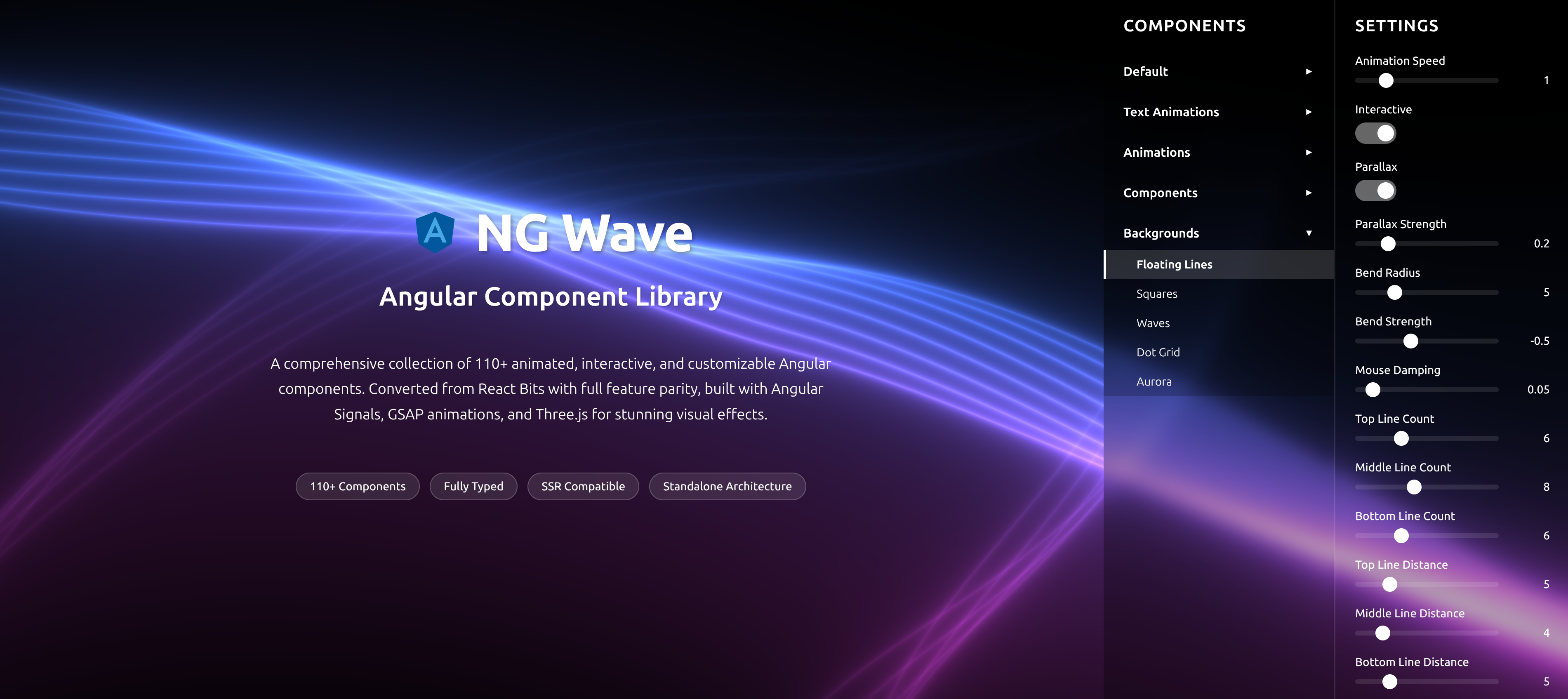
Internal link: NG Wave component library — https://ngwave.angularux.com
My 5‑step path (no feature freeze)
We prove ROI with numbers: render counts, INP, crash‑free sessions. Then we keep shipping. For an end‑to‑end Signals UI kit, check the NG Wave component library built with Signals and animations.
Instrument: add Angular DevTools flame charts, RUM/GA4 events for render counts & INP.
Stabilize: drop a SignalStore on the hottest path; remove paper‑over hacks.
Guardrail: Nx affected CI, perf budgets, and lint rules; enable strict flags.
Iterate: replace Subjects with typed events; add backoff/jitter; virtualize lists.
Expand: tokens + PrimeNG to unify UX; remote flags to roll out risky changes.
Next Steps and CTA: Prove Stability Without a Freeze
What to instrument next
If you’re evaluating whether to hire an Angular developer or bring in an Angular consultant for an AI‑generated codebase, I can review your repo and ship a stabilization plan in one week. See live, production Angular apps at IntegrityLens (AI‑powered verification system) and SageStepper (AI interview platform) for how I blend AI and Angular safely.
Add render‑count logging to key components; archive flame chart screenshots per PR.
Track crash‑free sessions and INP in GA4/BigQuery by route/view.
Place risky toggles (zoneless, virtual scroll, ws batching) behind remote flags.
Key takeaways
- AI‑generated Angular accelerates scaffolding but often ships with hidden coupling, change‑detection jank, and flaky tests.
- Signals + SignalStore eliminate jitter and implicit side effects while keeping delivery moving via feature flags.
- Nx ‘affected’ CI lets teams refactor safely without blocking product delivery.
- Typed event streams (HTTP/WebSocket) plus backoff/jitter stabilize real‑time dashboards.
- PrimeNG + tokens provide fast UI wins with measurable Core Web Vitals improvements.
- You can rescue an AI‑generated codebase without a feature freeze if you sequence guardrails first then iterate.
Implementation checklist
- Add a baseline SignalStore for your hottest path (chart/table/store) before refactoring features.
- Turn on TypeScript strict, Angular strictTemplates, and Angular DevTools flame charts in CI screenshots.
- Adopt Nx ‘affected’ + caching to confine builds/tests to changed projects.
- Introduce remote feature flags for risky toggles (e.g., ‘zoneless’, ‘virtualScroll’, ‘wsBatching’).
- Replace ad‑hoc Subjects with typed event schemas and retry/backoff with jitter.
- Add lint guardrails to block detectChanges(), setTimeout hacks, and unsafe global state.
Questions we hear from teams
- How much does it cost to hire an Angular developer for a stabilization engagement?
- Typical stabilization starts with a 1‑week assessment, then 2–4 weeks of implementation. Fixed‑fee assessments are common; implementation can be fixed‑scope or weekly. I’m a remote Angular consultant; we’ll align on outcomes, guardrails, and metrics before we start.
- What does an Angular consultant actually do on an AI‑generated codebase?
- Instrument performance, introduce Signals/SignalStore, add Nx affected CI, replace ad‑hoc Subjects with typed events, implement backoff/jitter, and add lint/perf budgets. We ship behind flags so features continue without a freeze.
- How long until we see measurable results?
- Within the first sprint. We target the hottest path first and measure render counts, INP, and crash‑free sessions. Most teams see 30–60% fewer renders and faster PRs in 1–2 weeks.
- Do we need to rewrite or upgrade Angular first?
- No. We harden what you have. If an upgrade is prudent, we plan it later. Signals/SignalStore, Nx CI, and guardrails work in parallel with delivery.
- What’s involved in a typical Angular engagement?
- Discovery call within 48 hours, repo review, risk map, and a week‑one stabilization plan. We deploy guardrails, fix hotspots, and keep features shipping behind flags. Expect a concise report with metrics and a runway for the next 90 days.
Ready to level up your Angular experience?
Let AngularUX review your Signals roadmap, design system, or SSR deployment plan.
NG Wave
Angular Component Library
A comprehensive collection of 110+ animated, interactive, and customizable Angular components. Converted from React Bits with full feature parity, built with Angular Signals, GSAP animations, and Three.js for stunning visual effects.
Explore Components