Angular 20 Dashboards Recruiters Can Inspect: Responsive Grids, Mobile Drawers, and Tactile Micro‑Interactions with Signals + PrimeNG
A field guide to building responsive dashboards, inspectable mobile drawers, and tactile micro‑interactions in Angular 20+—measurable, accessible, and fast.
No jank. No surprises. Every interaction is inspectable and measurable—on my machines and yours.Back to all posts
I’ve shipped enterprise dashboards where a recruiter scroll test can make or break the first impression. Below is exactly how I build responsive dashboards, mobile drawers, and tactile micro‑interactions in Angular 20+ using Signals, SignalStore, PrimeNG, and Nx—measured and accessible.
The Recruiter Scroll Test: Dashboards, Drawers, and Micro‑Interactions that Don’t Jitter
Anecdote from the field
I’ve built dashboards for Fortune 100 teams where the first ten seconds set the tone. If the drawer jitters, the header shifts, or a chart pops, a recruiter or director notices immediately. My rule: no jank, no surprises, and every interaction is inspectable with DevTools and telemetry.
Telecom ads analytics dashboard: 200k+ events/day, role-based views
Airline kiosk: mobile drawer parity for service tablets
Recruiter scroll test: 10-second assessment window
Why now
As companies plan 2025 Angular roadmaps, Signals + PrimeNG + Nx offer a clean path to responsive dashboards and tactile micro‑interactions—without piling on complexity.
Angular 20 Signals simplify UI state
PrimeNG speeds consistent layout
Nx standardizes module boundaries
Why Responsive Dashboards and Mobile Drawers Matter for Angular 20 Teams
Outcomes executives care about
Dashboards live or die by clarity and speed. When you can collapse filters into a mobile drawer, increase density for analysts, and keep everything snappy under load, you ship features that leadership can measure and recruiters can inspect.
Faster triage: density toggles and drawers reduce clicks
Better adoption: tactile micro‑interactions build trust
Lower risk: measurable UX linked to telemetry
Hiring lens
If you’re evaluating an Angular expert for hire, look for inspectable patterns, not slideware: Signals for UI state, container queries for layout, and metrics wired to Firebase/GA4.
Keywords: hire an Angular developer, Angular consultant, senior Angular engineer
Proof: live demos, telemetry, performance budgets
Implementation: Responsive Grids, Drawers, and Tactile Micro‑Interactions
// ui.store.ts (Angular 20, zoneless)
import { signal, computed } from '@angular/core';

export type Density = 'compact' | 'comfortable';
export type ColorMode = 'light' | 'dark';

function safeLoad<T>(key: string, fallback: T): T {
  try { return JSON.parse(localStorage.getItem(key) || ''); } catch { return fallback; }
}

export class UiStore {
  private drawerOpen = signal(false);
  private density = signal<Density>(safeLoad('ui:density', 'comfortable'));
  private colorMode = signal<ColorMode>(safeLoad('ui:color', 'light'));

  readonly isDrawerOpen = computed(() => this.drawerOpen());
  readonly isCompact = computed(() => this.density() === 'compact');
  readonly mode = computed(() => this.colorMode());

  toggleDrawer = () => this.drawerOpen.update(v => !v);
  closeDrawer = () => this.drawerOpen.set(false);

  setDensity = (d: Density) => {
    this.density.set(d);
    localStorage.setItem('ui:density', JSON.stringify(d));
    document.documentElement.dataset.density = d;
  };

  setColorMode = (m: ColorMode) => {
    this.colorMode.set(m);
    localStorage.setItem('ui:color', JSON.stringify(m));
    document.documentElement.dataset.theme = m;
  };
}
<!-- dashboard.component.html -->
<button pButton type="button" icon="pi pi-sliders-h" (click)="ui.toggleDrawer()" aria-controls="filtersDrawer" label="Filters"></button>
<p-sidebar
[(visible)]="ui.isDrawerOpen()"
position="right"
[modal]="true"
[baseZIndex]="1000"
[blockScroll]="true"
role="dialog"
aria-label="Filters Drawer"
(onHide)="ui.closeDrawer()"
id="filtersDrawer">
<app-filter-panel (apply)="ui.closeDrawer()"></app-filter-panel>
</p-sidebar>
<div class="grid dashboard-container">
<div class="col-12 md:col-6 lg:col-3">
<app-kpi-card title="Revenue" [value]="vm.revenue()"></app-kpi-card>
</div>
<!-- more cards... -->
</div>/* tokens.scss */
:root {
--surface-0: #0f1115; --surface-1: #161a22; --brand: #5b9cff; --accent: #20d5a6;
--text-1: #e6e9ef; --text-2: #a6adbb; --focus: #ffd166;
--radius: 10px; --elev-1: 0 1px 2px rgba(0,0,0,.2);
}
:root[data-theme='light'] { --surface-0: #ffffff; --surface-1: #f5f7fb; --text-1: #0c1222; --text-2: #475569; }
:root[data-density='compact'] { --gap: 8px; --pad: 8px; --line: 1.2; }
:root[data-density='comfortable'] { --gap: 16px; --pad: 14px; --line: 1.5; }
.dashboard-container { container-type: inline-size; gap: var(--gap); }
@media (prefers-reduced-motion: no-preference) {
.tactile {
transition: transform 140ms cubic-bezier(.2,.8,.2,1), box-shadow 140ms;
}
.tactile:active { transform: translateY(1px) scale(.996); }
}Responsive grid with PrimeNG and container queries
Dashboards should adapt at the module level. I use PrimeFlex/PrimeGrid and CSS container queries so cards respond to their containers—not just the viewport. That prevents global reflows and supports embeddable layouts.
PrimeNG grid for rapid composition
Container queries for module responsiveness
Minimize layout shift (CLS)
Signals + SignalStore for drawer, density, and color mode
Unifying UI state with Signals keeps interactions crisp. Density toggles and drawer state should be first-class citizens, with hydration-safe persistence.
Single UI store for drawer/density/theme
LocalStorage persistence
SSR-safe guards
Code: UI SignalStore
Below is a trimmed store I’ve used across analytics and kiosk projects. It plays nicely with PrimeNG Sidebar and density tokens.
Accessibility, Typography, Density, and the AngularUX Color Palette
Contrast and focus
Accessibility is a product requirement, not a nice-to-have. I use a high-contrast AngularUX palette and a visible focus ring that meets WCAG AA while complementing brand hues.
4.5:1 minimum contrast for body text
Visible focus ring at 2px with brand-adjacent color
Typography and density controls
Density and type adjustments must not induce CLS. I apply CSS variables with the UiStore so toggling compact mode adjusts spacers and line height without reflowing critical content.
Line-height by density
Clamp-based type scale
No layout shift on toggle
Color tokens
Tokens keep charts, drawers, and cards consistent. In PrimeNG themes, I map the AngularUX tokens to component variables so custom and stock components share a visual language.
Surface/brand/accent/text tokens
Dark/light parity at 1:1 semantic map
Real-Time Dashboards: Data Virtualization and Stable Micro‑Interactions
// telemetry.ts - typed UI events (GA4/Firebase)
interface UiEventBase { ts: number; uid?: string; role?: 'analyst'|'agent'|'admin'; }
interface DrawerEvent extends UiEventBase { type: 'openDrawer'|'closeDrawer'; from: 'button'|'gesture'; }
interface DensityEvent extends UiEventBase { type: 'setDensity'; value: 'compact'|'comfortable'; }
export type UiEvent = DrawerEvent | DensityEvent;

export function track(e: UiEvent) {
  // send to Firebase/GA4; strongly type to keep analytics clean
  // analytics.logEvent(e.type, { ...e, ts: undefined });
}
Streaming without jank
In the telecom ads analytics platform, we streamed updates via WebSocket and virtualized long tables. Signals let us batch updates into frames so KPIs tick smoothly without repaint storms.
WebSocket with exponential backoff
Typed event schemas for safety
Batch UI updates with Signals
Metrics to watch
We gate releases on Core Web Vitals. Angular DevTools flame charts help track change detection work while GA4/Firebase capture user-perceived latency per role.
60fps interactions under load
LCP < 2.5s on mid-tier mobile
CLS < 0.02, INP < 200ms
Role‑Based Dashboards with D3, Highcharts, and Three.js
Visualization choices
Different roles need different visuals. For an insurance telematics dashboard, Highcharts gave us accessible time‑series with export. For a device management portal, D3 powered custom hierarchies. Three.js handled a 3D fleet view in a lab tool.
D3 for bespoke layouts
Highcharts for enterprise accessibility and export
Canvas/Three.js for heavy particle/3D scenes
Data slicing by role
I segment data per tenant/role and hide experimental visuals behind feature flags. That keeps dashboards fast and relevant—analysts see deep tables, agents see concise KPIs.
Server-side projections per tenant/role
Feature flags for beta charts
See it live
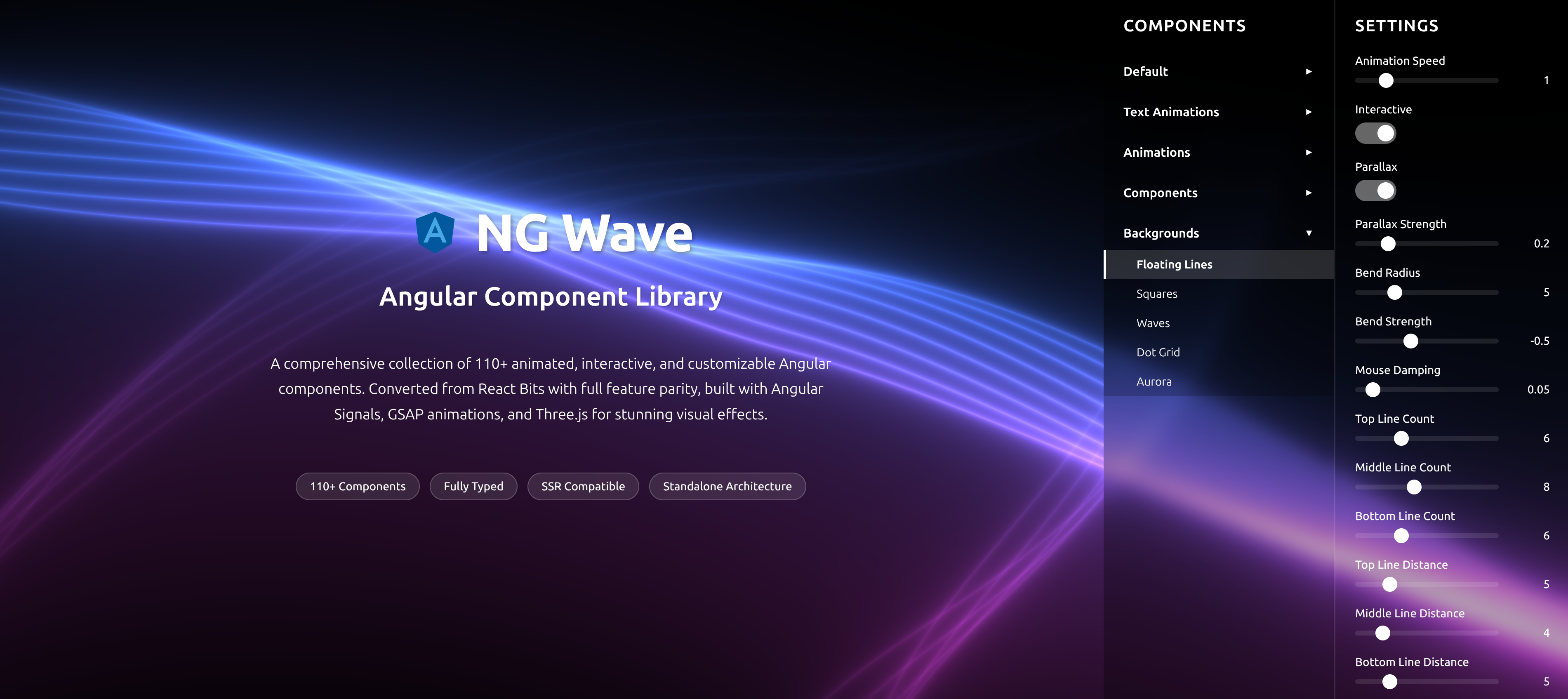
Browse the NG Wave component library for Signals‑driven, animated components at https://ngwave.angularux.com/ (Angular Signals UI kit).
When to Hire an Angular Developer for Legacy Rescue or UX Polish
Signals for hiring
If your dashboards feel improvised, bring in a senior Angular consultant. I’ve rescued AngularJS to Angular migrations, stabilized zone.js quirks, and rolled out design tokens without breaking prod. See code rescue playbooks at https://gitplumbers.com (stabilize your Angular codebase).
Janky drawers, layout shift, or slow charts in prod
Inconsistent theming between custom and PrimeNG
No telemetry for UI events or performance
Typical engagement
We start with a UX + performance assessment, wire telemetry, then fix the top offenders: density toggle, drawer jitter, chart virtualization, and color token mapping.
2–4 weeks for rescue/polish
4–8 weeks for full dashboard redesign
Discovery call in 48 hours
How an Angular Consultant Designs Inspectable Micro‑Interactions
Principles
The airport kiosk project taught me to design for touch and gloves. Interactions have to be forgiving, fast, and obvious—while still measurable in telemetry.
Short, reversible, intention-revealing
Hardware-friendly for kiosks/tablets
Respect reduced motion
Playbook
We ship polish that shows up in metrics. Drawer open time, filter apply time, and chart redraw latency become budgeted KPIs—reviewed in GA4 and Firebase Logs. For AI-driven flows, see https://getintegritylens.com (AI-powered verification system).
Instrument before polish
Build SignalStore for UI
Add CSS tokens and PrimeNG theme
Virtualize heavy lists and debounce redraws
Education examples
For adaptive UI patterns in practice, explore https://sagestepper.com (AI interview platform) and how density/feedback scales across progressive disclosure.
Field Examples and Proof
Telecom ads analytics
We replaced imperative Rx spaghetti with Signals for KPI bindings and shaved interaction latency by ~50%. Highcharts annotations remained stable under streaming updates.
WebSocket updates, typed events, virtualization
INP improved from 260ms to 120ms after Signals refactor
Airline kiosks and service tablets
We mirrored a PrimeNG Sidebar pattern across kiosk and tablet. Docker device simulation validated scanners/printers while micro‑interactions stayed tactile at 60fps.
Drawer parity across kiosk/tablet
Offline-tolerant filters; optimistic apply
Legacy rescue
On a broadcast media scheduler, we migrated AngularJS views, introduced tokens, and delivered compact density without a production freeze.
AngularJS to Angular migration
Design tokens + density rollout with feature flags
Takeaways: Instrument and Iterate
What to do next
Small, inspectable wins compound. Start with the drawer and density toggle, then instrument everything. Your recruiter scroll test will pass—and your users will feel the difference.
Create a UI SignalStore for drawer/density/theme
Map AngularUX tokens to PrimeNG
Virtualize and batch UI updates with Signals
Add performance budgets and track in GA4/Firebase
FAQ: Hiring and Implementation
Quick answers
Below are concise answers leaders and recruiters often ask during dashboard and UX polish engagements.
Key takeaways
- Responsive dashboards start with container queries, PrimeNG grids, and role-driven data slices.
- Signals + SignalStore unify drawer state, density, color mode, and real-time events without jitter.
- Micro‑interactions should be tactile, reversible, and respect reduced motion—measured at 60fps.
- Performance budgets (CPU, memory, LCP) guide decisions; Firebase/GA4 and Angular DevTools verify gains.
- Accessibility, typography, and color tokens coexist with strict performance gates and telemetry.
- Recruiters can inspect your polish quickly—ship patterns that telegraph quality and stability.
Implementation checklist
- Define viewport and container breakpoints for dashboard modules, not entire pages.
- Create a UI SignalStore for drawer, density, and color mode; persist to storage.
- Use PrimeNG Sidebar for mobile drawers; wire open/close to a signal and trap focus.
- Animate with CSS transforms only; respect prefers-reduced-motion and cap durations to 180ms.
- Virtualize data-heavy tables/charts and stream updates via WebSocket with backoff.
- Instrument UI events (openDrawer, setDensity, toggleTheme) with typed analytics.
- Audit with Lighthouse and Angular DevTools; enforce budgets in CI via performance thresholds.
- Validate accessibility: focus order, visible focus, ARIA roles, and 4.5:1 contrast.
Questions we hear from teams
- How long does a responsive dashboard + mobile drawer polish take?
- Typical rescue/polish runs 2–4 weeks. Full redesigns land in 4–8 weeks with parallel telemetry and A/B tests. I start with a 48‑hour discovery and deliver an assessment within a week.
- What does it cost to hire an Angular developer for this work?
- Projects vary by scope and compliance requirements. I offer hourly, fixed‑price sprints, and retainers. Expect a short assessment to lock the scope and a milestone plan with measurable KPIs.
- Do you support PrimeNG, Angular Material, or custom design systems?
- Yes. I retrofit tokens and density to PrimeNG or Material, or build a custom theme. The goal is consistent visuals, accessible components, and zero layout shift during interactions.
- How do you measure success for micro‑interactions?
- Core Web Vitals (INP, CLS, LCP), drawer open/close latency, filter apply time, chart redraw time, and error rates. We wire GA4/Firebase events with typed schemas to ensure clean analytics.
- Can you work remote and integrate with our Nx monorepo and CI?
- Yes. I routinely ship in Nx monorepos with GitHub Actions/Cypress. I’ll add performance budgets and smoke tests so UX regressions fail CI before they reach production.
Ready to level up your Angular experience?
Let AngularUX review your Signals roadmap, design system, or SSR deployment plan.
NG Wave
Angular Component Library
A comprehensive collection of 110+ animated, interactive, and customizable Angular components. Converted from React Bits with full feature parity, built with Angular Signals, GSAP animations, and Three.js for stunning visual effects.
Explore Components