Responsive Angular 20+ Dashboards That Feel Native: Mobile Drawers, Tactile Micro‑Interactions, and Recruiter‑Ready Polish
How I ship dashboards that glide on mobile, snap with tactile motion, and stay measurable under performance budgets—Signals, SignalStore, PrimeNG, Nx, Firebase.
Recruiters don’t read your code—they feel your UI in the first 5 seconds. Make the drawer glide, make the chart breathe, and everything else gets easier.Back to all posts
I’ve shipped dashboards for airlines, telecoms, and insurers where the real interview is a stakeholder scrolling your app on an iPhone. If the mobile drawer jitters or the chart lags, you’ve lost trust. This is the playbook I use on Angular 20+ with Signals, SignalStore, PrimeNG, Nx, and Firebase to make dashboards feel native—and stay measurable.
A Recruiter Scrolls Your Dashboard on an iPhone: Do the Drawers Glide or Jitter?
Scene from the front lines
At a telecom client, the VP opened our analytics dashboard on an iPhone during a status call. The drawer opened. It either glides or it doesn’t. We passed—because the motion was subtle, the focus landed where expected, and charts updated without reflow. That level of polish is the difference when you hire an Angular expert.
Telecom analytics dashboard, Angular 20+
Mobile drawer powers filters and saved views
First impression swings the hiring decision
Why Responsive Dashboards and Tactile Micro‑Interactions Matter in Angular 20+
UX, not vibes
Micro‑interactions communicate state transitions (filters applied, tiles re‑ordered) without making users read. Done right, they lower INP, reduce mis-taps, and create a consistent mental model across desktop and mobile. In Angular 20+, Signals let us coordinate these transitions without zone churn.
Faster cognition
Lower INP
Trust via consistency
Enterprise constraints
In multi‑tenant apps, different roles expose different panels and densities. Data is heavy, charts are alive, and budget guards run in CI. This is where I lean on SignalStore for state, PrimeNG for robust widgets, and Nx for quality gates.
Role‑based views
Heavy datasets
CI budgets
Design System Foundation: Tokens, Density Controls, and the AngularUX Color Palette
Typography and density tokens
Start with tokens. These power consistent spacing and type under responsive breakpoints and user‑selected density.
Readable on small screens
Consistent rhythm
Density switch
Code: tokens in SCSS
:root {
  /* Type scale */
  --font-sans: ui-sans-serif, system-ui, -apple-system, Segoe UI, Roboto, Helvetica, Arial;
  --fs-300: clamp(12px, 1.1vw, 13px);
  --fs-400: clamp(14px, 1.3vw, 16px);
  --fs-500: clamp(16px, 1.6vw, 18px);
  --lh-tight: 1.25; --lh-normal: 1.5;

  /* Spacing & density */
  --space-1: 4px; --space-2: 8px; --space-3: 12px; --space-4: 16px; --space-5: 24px;
  --density: 1; /* 1=comfortable, .85=compact */

  /* AngularUX palette */
  --ux-bg: #0f1220; --ux-elev-1: #161a2a; --ux-elev-2: #1d2236;
  --ux-text: #e8ecf6; --ux-muted: #9aa4c1;
  --ux-accent: #6cd4ff; --ux-accent-2: #a78bfa; --ux-danger: #ff6b6b;

  /* Focus & states */
  --focus-ring: 0 0 0 3px rgba(108,212,255,.35);
}

[data-density="compact"] { --density: .85; }

h1, h2, h3 { font-family: var(--font-sans); line-height: var(--lh-tight); }
body { color: var(--ux-text); background: var(--ux-bg); }
.card { background: var(--ux-elev-1); border-radius: 12px; padding: calc(var(--space-4) * var(--density)); }
.card + .card { margin-top: calc(var(--space-4) * var(--density)); }
:focus-visible { outline: none; box-shadow: var(--focus-ring); border-radius: 8px; }
@media (prefers-reduced-motion: reduce) { * { transition: none !important; animation: none !important; } }
Accessibility defaults
Angular Material or PrimeNG themes can be mapped to these tokens. Enforce contrast with design tokens, and provide a density + motion toggle in user settings.
Contrast ≥ 4.5:1
Reduced motion
Keyboard traps
Mobile Drawer Patterns That Feel Native (Signals + PrimeNG + CDK)
State with Signals/SignalStore
Use Signals for open/close, focus target, and active filter. Persist last used tab so it feels personal without surprise reloads.
Deterministic state
SSR‑safe
No zone thrash
Code: PrimeNG Sidebar + Signals
import { Component, inject, signal, computed, effect } from '@angular/core';
import { SidebarModule } from 'primeng/sidebar';
import { toObservable } from '@angular/core/rxjs-interop';

@Component({
  selector: 'ux-mobile-drawer',
  standalone: true,
  imports: [SidebarModule],
  templateUrl: './mobile-drawer.html',
  styleUrls: ['./mobile-drawer.scss']
})
export class MobileDrawerComponent {
  open = signal(false);
  activeTab = signal<'filters' | 'views'>('filters');
  reducedMotion = signal(matchMedia('(prefers-reduced-motion: reduce)').matches);

  toggle = () => this.open.update(v => !v);
  openFilters = () => { this.activeTab.set('filters'); this.open.set(true); };

  // Example: announce open state for SRs
  ariaLabel = computed(() => this.open() ? 'Close filters' : 'Open filters');

  // Analytics example (GA4/Firebase) when drawer opens
  constructor() {
    effect(() => {
      if (this.open()) {
        // window.gtag?.('event', 'drawer_open', { tab: this.activeTab() });
      }
    });
  }
}<p-sidebar [(visible)]="open()" [modal]="true" [baseZIndex]="10000" [blockScroll]="true"
[transitionOptions]="reducedMotion() ? '0ms' : '150ms cubic-bezier(.2,.8,.2,1)'">
<div cdkTrapFocus>
<nav class="tabs" role="tablist">
<button role="tab" [attr.aria-selected]="activeTab()==='filters'" (click)="activeTab.set('filters')">Filters</button>
<button role="tab" [attr.aria-selected]="activeTab()==='views'" (click)="activeTab.set('views')">Views</button>
</nav>
<section *ngIf="activeTab()==='filters'"> ... </section>
<section *ngIf="activeTab()==='views'"> ... </section>
</div>
</p-sidebar>p-sidebar .p-sidebar { background: var(--ux-elev-2); color: var(--ux-text); }
.tabs { display: grid; grid-auto-flow: column; gap: calc(var(--space-2) * var(--density)); }
button[role=tab] { padding: calc(var(--space-2) * var(--density)) var(--space-3); }
button[aria-selected=true] { background: color-mix(in oklab, var(--ux-accent) 20%, transparent); }Accessible focus management
Use cdkTrapFocus inside the drawer and return focus to the opener on close. Announce tab changes and selection counts via aria‑live for screen readers.
Trap and return focus
Escape closes
Announce changes
Tactile motion
Favor opacity/transform transitions (GPU‑friendly), 150–200ms. Avoid layout‑thrashing properties. Provide a reduced motion variant and respect prefers‑reduced‑motion.
Short, spring‑like
Reduced-motion fallback
No reflow
Responsive Dashboard Layout: Grids, Virtualized Lists, and Role‑Based Panels
Grid that adapts
Use CSS Grid with clamp() so tiles flow into 1–3 columns. Respect device safe areas for modern phones.
1‑3 columns
Card snapping
Safe areas
Code: grid + virtual scroll
<main class="grid">
  <section class="tile" *ngFor="let t of tiles"> ... </section>
</main>
<cdk-virtual-scroll-viewport itemSize="64" class="list">
  <div *cdkVirtualFor="let row of rows">{{ row.name }}</div>
</cdk-virtual-scroll-viewport>
.grid { display: grid; gap: calc(var(--space-4) * var(--density));
grid-template-columns: repeat(auto-fill, minmax(clamp(260px, 40vw, 420px), 1fr));
padding: max(var(--space-4), env(safe-area-inset-left)) max(var(--space-4), env(safe-area-inset-right));
}
.list { height: 60vh; background: var(--ux-elev-1); }
.tile { contain: content; will-change: transform; }Role‑based panels
Use permission‑driven selectors to include/exclude tiles, not just disable them. SignalStore keeps the active role and tenant in sync with router state so layout changes feel intentional.
Hide vs disable
Permission‑driven slots
Signals for active role
Charts That Don’t Stutter: D3/Highcharts with Canvas/Three.js and WebSocket Signals
Typed event schemas
For real‑time dashboards, push typed events to a signal and update series incrementally. Cap points (e.g., last 2,000) and decimate on the fly for 60fps.
WebSocket -> Signal
Back‑pressure
Point caps
Code: Highcharts + Signals
import * as Highcharts from 'highcharts';
import { signal, effect } from '@angular/core';

type Telemetry = { t:number; v:number };
const incoming = signal<Telemetry | null>(null);
const buffer = signal<Telemetry[]>([]);

// accumulate events and flush in RAF
const schedule = () => requestAnimationFrame(() => {
  const items = buffer().splice(0);
  if (items.length) {
    chart.series[0].addPoint(items.map(i => [i.t, i.v]), false, chart.series[0].data.length > 2000);
    chart.redraw();
  }
});

effect(() => { const evt = incoming(); if (evt) { buffer.update(b => (b.push(evt), b)); schedule(); } });

const chart = Highcharts.chart('c', { chart:{ backgroundColor:'transparent' }, series:[{ type:'line', data:[] }] });
Canvas/Three.js for heavy scenes
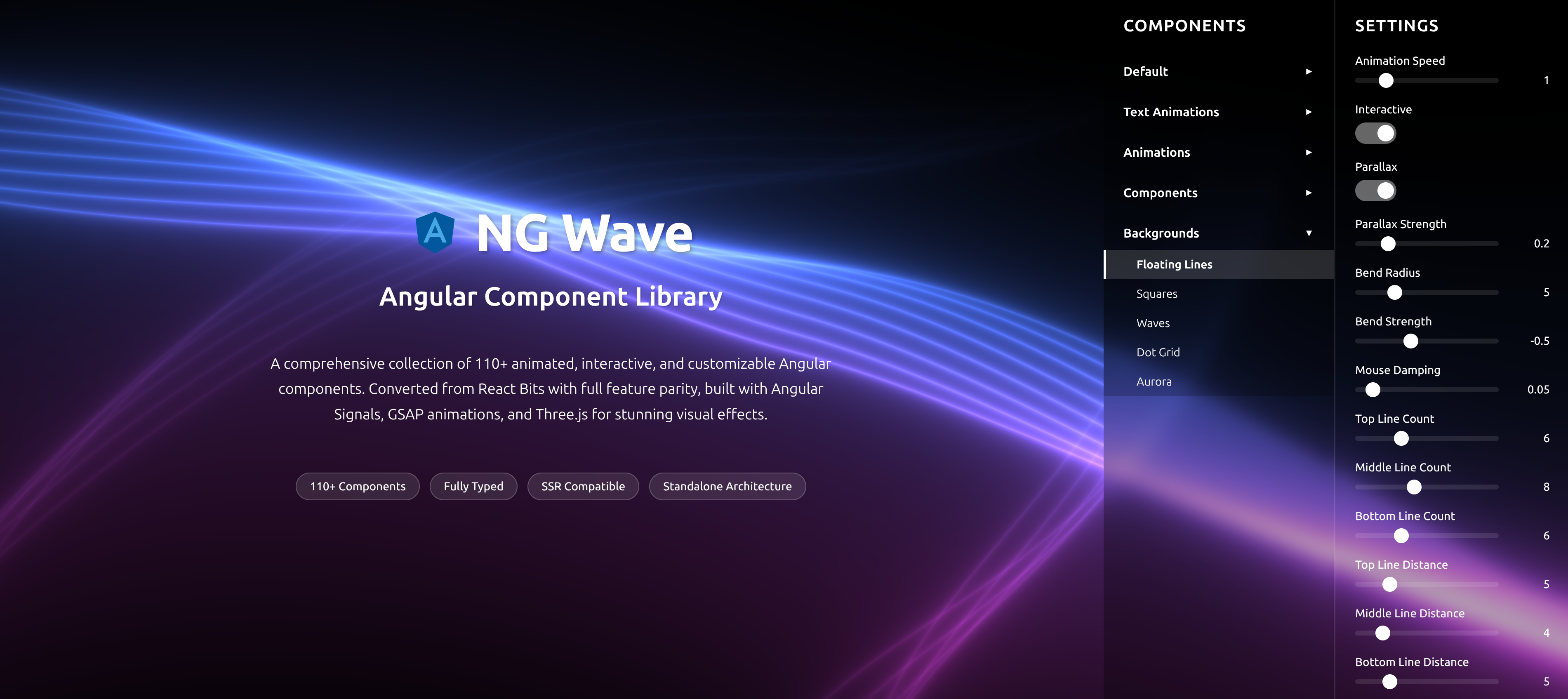
For particle‑like visuals (e.g., vehicle telematics), I’ll use Canvas or Three.js, especially on mobile. See the NG Wave component library for animated, Signals‑driven components built with Three.js and strict budgets.
Avoid DOM thrash
Stable FPS
GPU‑friendly
Performance Budgets and Telemetry: Prove It in CI and Production
Budgets in CI
Guard polish with budgets and Lighthouse CI. Preview every PR with Firebase Hosting so PMs can feel the drawer on real devices.
Bundle size
LCP/INP thresholds
Fail fast
Code: budgets + Lighthouse CI
# angular.json (excerpt)
budgets:
  - type: bundleSize
    name: main
    maximumWarning: 250kb
    maximumError: 300kb
  - type: initial
    maximumWarning: 800kb
    maximumError: 950kb
---
# .lighthouserc.yml
ci:
  collect:
    numberOfRuns: 3
    url: ["$PREVIEW_URL"]
  assert:
    assertions:
      categories:performance: ["error", {"minScore": 0.9}]
      interactive: ["warn", {"maxNumericValue": 3500}]
      screen-reader: ["error", {"minScore": 0.95}]
Runtime telemetry
Track INP and custom events (drawer_open, filter_apply) in Firebase Performance and GA4. Validate change detection and Signals graph in Angular DevTools to catch accidental reflows.
Firebase Performance
GA4 events
Angular DevTools
When to Hire an Angular Developer for Dashboard UX Polish
You likely need help if
I typically parachute in for 2–4 weeks to stabilize motion, standardize tokens, and set budgets. If you’re evaluating an Angular consultant for a larger redesign, we can prototype a recruiter‑ready slice that becomes your reference implementation.
Mobile drawers jitter or block scroll
Charts stall when filters change
Contrast/density are inconsistent across pages
Stakeholders can’t feel progress in weekly demos
How an Angular Consultant Designs Mobile Drawers and Micro‑Interactions
My playbook
This mirrors what I did on airport kiosks (offline‑tolerant drawers for peripherals), telecom analytics (real‑time charts), and insurance telematics (role‑based tiles). It’s measurable and repeatable.
Audit with Angular DevTools + Lighthouse
Define tokens, colors, density
Refactor drawers to Signals + CDK/PrimeNG
Virtualize lists and decimate chart streams
Add CI budgets + Firebase previews
Example: Recruiter‑Ready Mobile Drawer + Chart Panel
Full snippet
<header class="toolbar">
  <button (click)="drawer.toggle()" aria-label="Toggle filters">Filters</button>
  <div class="spacer"></div>
  <button (click)="density='compact'" [attr.aria-pressed]="density==='compact'">Compact</button>
  <button (click)="density='comfortable'" [attr.aria-pressed]="density==='comfortable'">Comfortable</button>
</header>

<ux-mobile-drawer #drawer></ux-mobile-drawer>

<main class="grid" [attr.data-density]="density">
  <section class="card">
    <h3>Live Throughput</h3>
    <div id="c" style="height:220px"></div>
  </section>
  <section class="card">
    <h3>Recent Sessions</h3>
    <cdk-virtual-scroll-viewport itemSize="56" class="list">
      <div *cdkVirtualFor="let s of sessions">{{ s.user }} · {{ s.duration }}s</div>
    </cdk-virtual-scroll-viewport>
  </section>
</main>
export class DashboardComponent {
density: 'compact' | 'comfortable' = 'comfortable';
sessions = Array.from({length:5000}).map((_,i)=>({user:`u${i}`, duration:Math.round(Math.random()*300)}));
// Highcharts init as in previous section; wire telemetry stream to 'incoming' signal.
}.toolbar { display:flex; align-items:center; gap: var(--space-2); padding: var(--space-3); background: var(--ux-elev-2); }
.spacer { flex:1; }Key Takeaways for Recruiter‑Ready UX
- Start with tokens and the AngularUX palette; enforce density and type rhythm.
- Drive drawers, filters, and chart updates with Signals/SignalStore to avoid jitter.
- Prefer GPU‑friendly motion with reduced‑motion fallbacks; trap focus in overlays.
- Virtualize heavy lists and decimate chart points; choose Canvas/Three.js when needed.
- Lock in Lighthouse budgets and Firebase telemetry so polish is provable, not subjective.
FAQs: Hiring, Timelines, and Implementation Details
Quick answers
If you need a remote Angular developer with Fortune 100 experience to stand up recruiter‑ready UX quickly, I’m currently accepting 1–2 projects per quarter. See CTAs below.
2–4 weeks to stabilize polish
4–8 weeks for full redesign slices
Discovery call in 48 hours
Key takeaways
- Responsive dashboards start with tokens: typography, spacing, density, and a constrained color palette.
- Use Signals + SignalStore to drive drawers, selections, and chart updates without jitter.
- PrimeNG + CDK give you mobile drawers with focus traps, escape keys, and reduced‑motion variants.
- Measure polish with real budgets: Lighthouse, INP, and CI gates; verify in Firebase Performance.
- Charts must stream smoothly—prefer Canvas/Three.js for heavy series, and virtualize tables with CDK.
Implementation checklist
- Define typography, spacing, and density tokens at the :root; map to Angular Material/PrimeNG where used.
- Implement mobile drawer via Signals + PrimeNG Sidebar or CDK Overlay with focus trapping and ARIA.
- Use reduced motion media queries and expose a user preference toggle in the profile menu.
- Adopt virtual scroll for tables and lazy series updates for D3/Highcharts; cap point counts.
- Set bundle budgets and Lighthouse CI thresholds; track INP and TTI in Firebase Performance.
- Gate color contrast and keyboard traps with automated a11y tests (Cypress + axe) in Nx.
Questions we hear from teams
- How much does it cost to hire an Angular developer for dashboard UX polish?
- Small engagements (2–4 weeks) typically range from $12k–$35k depending on scope: tokens, drawer refactor, virtualization, budgets, and telemetry. Fixed‑price discovery and a recruiter‑ready prototype slice are available.
- What does an Angular consultant do on day one?
- Day one I run Angular DevTools and Lighthouse, audit tokens and motion, inspect bundle budgets, and map role‑based panels. Then I prioritize drawers, chart stutter, and a11y blockers, setting CI gates and Firebase previews so stakeholders can feel improvements.
- How long does it take to implement mobile drawers and tactile micro‑interactions?
- A focused pass is 1–2 weeks: refactor state to Signals, wire PrimeNG/CDK drawers with focus traps, add reduced‑motion variants, and set telemetry. Complex multi‑tenant layouts or chart pipelines extend to 3–4 weeks.
- Can you handle heavy data and real‑time charts on mobile?
- Yes. I use data virtualization, decimation, and Canvas/Three.js for heavy scenes. Streams enter via WebSocket or Firebase, typed into Signals, with back‑pressure and point caps to maintain 60fps.
- What’s involved in a typical Angular engagement?
- Discovery (1 week), implementation (2–6 weeks), and handoff with docs and CI gates. I work remote, integrate with Nx monorepos, and ship Firebase Hosting previews. You get measurable UX improvements and a durable component library.
Ready to level up your Angular experience?
Let AngularUX review your Signals roadmap, design system, or SSR deployment plan.
NG Wave
Angular Component Library
A comprehensive collection of 110+ animated, interactive, and customizable Angular components. Converted from React Bits with full feature parity, built with Angular Signals, GSAP animations, and Three.js for stunning visual effects.
Explore Components