Retrofit a Design System into a Legacy Angular App: Tokens, Density, and PrimeNG Theming—Without Breaking Prod
A field‑tested plan to unify inconsistent styling in legacy Angular apps using tokens, Signals, and staged rollouts—so design polish lands without production fires.
Design systems aren’t a redesign—they’re an operating system for your UI. Ship them like infrastructure, not décor.Back to all posts
I’ve been the person called when a dashboard looks like five teams shipped five different products. Inconsistent buttons, three blues, and density whiplash. The fix isn’t a big‑bang rewrite—it’s a careful retrofit. Here’s exactly how I unify legacy Angular styling using tokens, Signals, and staged rollouts that won’t set production on fire.
The Dashboard That Looks Like Five Products
As companies plan 2025 Angular roadmaps, design debt is hurting velocity and a11y scores. The fix is systematic and measurable.
Real projects, real mess
On an employee tracking and payment system for a global entertainment company, we had PrimeNG mixed with hand‑rolled components and inline colors. At a telecom ads analytics platform, D3 and Highcharts used different palettes. The airport kiosk software had offline states styled separately from online flows. The pattern was consistent: no tokens, no system, lots of risk.
Global entertainment payroll portal with three button systems
Telecom ads analytics with divergent chart themes
Airport kiosk UI with offline states but no shared tokens
Why a retrofit beats a rewrite
Rewrites stall roadmaps. A design‑system retrofit lands improvements incrementally and keeps revenue dashboards, kiosks, and device portals running. As an Angular consultant, my goal is to let you hire an Angular developer to ship polish without pausing feature work.
No downtime
Lower risk
Faster ROI
Why Unifying Styling Matters for Angular 20+ Teams
This isn’t about pretty buttons. It’s about reliability, a11y, and measurable engineering discipline for Angular 20+.
Business impact
Multi‑tenant, role‑based dashboards read differently for finance vs. ops. When typography, color contrast, and density are consistent, teams ship faster and customers churn less. Accessibility becomes policy, not a scramble.
Consistent UI reduces support tickets
Design velocity improves
A11y compliance avoids fines
Engineering impact
Tokens turn emotional debates into data: change a variable, measure Lighthouse/INP, ship. In an Nx monorepo with Firebase previews, we validate theming and density per route before merging.
1 source of truth via tokens
Visual diffs are stable
PrimeNG/Material upgrades are safer
The Retrofit Plan: Tokenize, Theme, and Roll Out Safely
Below are the exact snippets I use to bootstrap a design system retrofit.
1) Inventory and map to tokens
Start with a spreadsheet: collect every hex, font size, and spacing value. Map them to an AngularUX palette and scale. No code changes yet—just truth discovery.
Extract palette from live CSS
Normalize typography and spacing
Decide density steps (comfortable/compact)
2) Create CSS variables for tokens
Define tokens once. I prefer CSS variables backed by SCSS maps for compile‑time utilities and runtime theme switching.
3) Signals‑driven ThemeStore
Signals + SignalStore hold theme, density, and high contrast. Components subscribe via computed signals; no leaky Observables in templates.
No zone.js gymnastics
Instant UI response
Testable state
4) Theme third‑party components
Map PrimeNG variables to your tokens and create thin DS components (DSButton, DSInput) to isolate future theming changes.
PrimeNG via CSS vars
Minimal wrappers
Avoid hard overrides
5) Canary rollout with feature flags
Enable the design system per route or tenant. Use Firebase to flip flags for internal users first. CI runs Lighthouse to guarantee budgets aren’t blown.
Firebase Remote Config
Per‑route flags
A/B test density
Design Tokens and Theme Service (Code)
/* tokens.scss — base tokens */
:root {
  /* AngularUX neutrals */
  --color-surface-0: #0b0c10;
  --color-surface-50: #16181d;
  --color-surface-100: #20232a;
  --color-text-contrast: #ffffff;

  /* Primary (Azure 500) */
  --color-primary-400: #60a5fa;
  --color-primary-500: #3b82f6;
  --color-primary-600: #2563eb;

  /* Semantic */
  --color-success-500: #16a34a;
  --color-warning-500: #f59e0b;
  --color-danger-500: #ef4444;

  /* Typography */
  --font-family-sans: 'Inter', system-ui, -apple-system, 'Segoe UI', Roboto, sans-serif;
  --font-size-100: 12px; /* caption */
  --font-size-200: 14px; /* body */
  --font-size-300: 16px; /* body-lg */
  --font-size-400: 20px; /* h5 */

  /* Spacing & radius */
  --space-1: 4px; --space-2: 8px; --space-3: 12px; --space-4: 16px;
  --radius-2: 6px; --radius-3: 10px;

  /* Density */
  --density-scale: 0; /* -1 compact, 0 comfy, +1 spacious */
}

[data-density='compact'] { --density-scale: -1; }
[data-density='spacious'] { --density-scale: 1; }

/* Utility consuming density */
.u-pad { padding: calc(var(--space-3) + (var(--density-scale) * 2px)); }

/* PrimeNG mapping */
:root {
  --p-primary-color: var(--color-primary-500);
  --p-text-color: var(--color-text-contrast);
  --p-content-background: var(--color-surface-100);
  --p-border-radius: var(--radius-2);
}
// theme.store.ts — Signals + SignalStore
import { signal, computed, Injectable, effect } from '@angular/core';
import { SignalStore } from '@ngrx/signals';
export type ThemeMode = 'dark' | 'light';
export type Density = 'compact' | 'comfortable' | 'spacious';
@Injectable({ providedIn: 'root' })
export class ThemeStore extends SignalStore<{ mode: ThemeMode; density: Density; highContrast: boolean }>({
mode: 'dark',
density: 'comfortable',
highContrast: false,
}) {
readonly dataAttrs = computed(() => ({
'data-theme': this.state().mode,
'data-density': this.state().density,
'data-contrast': this.state().highContrast ? 'high' : 'normal'
}));
setMode(mode: ThemeMode) { this.patchState({ mode }); }
setDensity(density: Density) { this.patchState({ density }); }
setHighContrast(high: boolean) { this.patchState({ highContrast: high }); }
constructor() {
super();
effect(() => {
const attrs = this.dataAttrs();
const root = document.documentElement;
Object.entries(attrs).forEach(([k, v]) => root.setAttribute(k, String(v)));
});
}
}<!-- app.component.html — apply data attributes and use DS components -->
<div [attr.data-theme]="theme.dataAttrs()['data-theme']"
[attr.data-density]="theme.dataAttrs()['data-density']"
[attr.data-contrast]="theme.dataAttrs()['data-contrast']">
<ds-toolbar title="Analytics">
<button pButton label="Density" icon="pi pi-sliders-h" (click)="theme.setDensity('compact')"></button>
</ds-toolbar>
<section class="u-pad">
<ds-card>
<app-usage-chart></app-usage-chart>
</ds-card>
</section>
</div>/* primeng-overrides.scss — keep it thin */
.p-button {
background: var(--p-primary-color);
border-radius: var(--p-border-radius);
font-family: var(--font-family-sans);
font-size: var(--font-size-200);
}
.p-inputtext {
background: var(--p-content-background);
color: var(--p-text-color);
}CSS variables for AngularUX palette
The AngularUX palette leans on deep neutrals with a saturated primary for data viz clarity.
SignalStore theme state
Manage theme mode, density, and contrast with Signals for instant updates.
PrimeNG theming via tokens
Override PrimeNG once, not per component.
Staged Rollout with Firebase and Nx
// flags.service.ts — Firebase Remote Config
@Injectable({ providedIn: 'root' })
export class FlagsService {
  readonly useDesignSystem = signal(false);
  constructor() {
    // pseudo: initialize Firebase, fetch remote config
    const enabled = localStorage.getItem('ds') === '1'; // simple override for internal canaries
    this.useDesignSystem.set(enabled);
  }
}
# .github/workflows/lhci.yml — Lighthouse CI on previews
name: lhci
on: [pull_request]
jobs:
lhci:
runs-on: ubuntu-latest
steps:
- uses: actions/checkout@v4
- uses: actions/setup-node@v4
with: { node-version: 20 }
- run: npm ci
- run: npx nx run web:build --configuration=production
- run: npx lhci autorun --upload.target=temporary-public-storage# Firebase Hosting preview in PRs
firebase hosting:channel:deploy pr-$PR_NUMBER --only web<!-- route-level canary -->
<ng-container *ngIf="flags.useDesignSystem(); else legacy">
<app-new-dashboard></app-new-dashboard>
</ng-container>
<ng-template #legacy>
<app-legacy-dashboard></app-legacy-dashboard>
</ng-template>Feature flags for canaries
Flip the system per route/tenant using Firebase Remote Config.
CI budgets and previews
Validate INP/LCP and bundle size in CI with Lighthouse and channel previews.
Example from the Field: Analytics and Kiosks
Design polish can coexist with performance budgets. We measured LCP/INP and protected them with CI gates while introducing the new visual language.
Telecom ads analytics
We mapped Highcharts and D3 to the same tokens and added compact density for tables with virtualization. INP improved from 180 ms to 110 ms on key dashboards and visual diffs stabilized across tenants.
Unified D3/Highcharts palette
Compact tables for media buyers
Airport kiosk hardware
We themed card reader states (ready, reading, error) using semantic tokens. Docker hardware simulation let us iterate quickly while the kiosk stayed consistent across printers and scanners.
Offline‑tolerant UI
Peripheral states as tokens
Insurance telematics
Risk scoring used a color‑blind‑safe ramp; drivers and underwriters saw the same components with role‑based columns and density presets.
Role‑based dashboards
Accessible color ramps
When to Hire an Angular Developer for Legacy Rescue
If you need a remote Angular developer with enterprise experience, I’m available for 1–2 select projects per quarter.
Signals you’re ready
If small visual changes feel like rewiring a plane mid‑flight, bring in an Angular expert who’s done this in Fortune 100 environments. A short engagement can put tokens, wrappers, and CI guards in place so your team iterates confidently.
Three+ competing button styles
PrimeNG overrides duplicated per component
Design tweaks require code hunts
Typical timeline
I usually deliver the audit and token sheet in a week, then stand up DS wrappers and route‑level canaries. We pick one or two business‑critical pages to prove stability before scaling.
Week 1: audit + tokens
Weeks 2‑3: wrappers + canaries
Week 4: scale to high‑traffic routes
Accessibility, Typography, Density, and the AngularUX Color Palette
Polish is not fluff. It’s the layer that reduces cognitive load and accelerates decision‑making in role‑based dashboards.
Accessibility first
Tokens control contrast and focus state. Motion is toggled via prefers‑reduced‑motion and a tokenized duration scale.
WCAG 2.2 AA contrast
Focus rings via tokens
Reduced motion settings
Typography and density controls
Inter at 14/16/20 with line‑height tokens works well across dashboards. Density toggles are cached per user and validated via analytics to ensure adoption.
Scale for readability
Compact mode for data grids
Color palette for data viz
Highcharts and D3 palettes bind to tokens—no more hard‑coded hex in chart configs. Three.js overlays and Canvas schedulers use the same variables for cohesion.
Semantic ramps
Color‑blind‑safe sets
What to Measure and How to Keep It Honest
Performance budgets and telemetry are non‑negotiable. UI cohesion must not cost responsiveness.
Metrics to watch
Set thresholds before rollout. I treat regressions as test failures. Angular DevTools helps spot change detection hotspots if new wrappers get too heavy.
Lighthouse: LCP, INP, CLS
Bundle size deltas
A11y score
Telemetry pipelines
Log density, theme toggles, and a11y settings to understand real usage. Feature flags plus GA4/Firebase tell you when to flip defaults confidently.
Firebase Analytics
Custom INP tracing
Feature flag adoption
Concise Takeaways
- Tokenize color, typography, spacing, and density with CSS variables.
- Drive theme and density via Signals + SignalStore for instant UX updates.
- Wrap PrimeNG with thin DS components; map variables once.
- Use Firebase flags and Nx/Firebase previews to canary per route.
- Protect INP/LCP and a11y with CI budgets and telemetry.
Next Steps and CTA
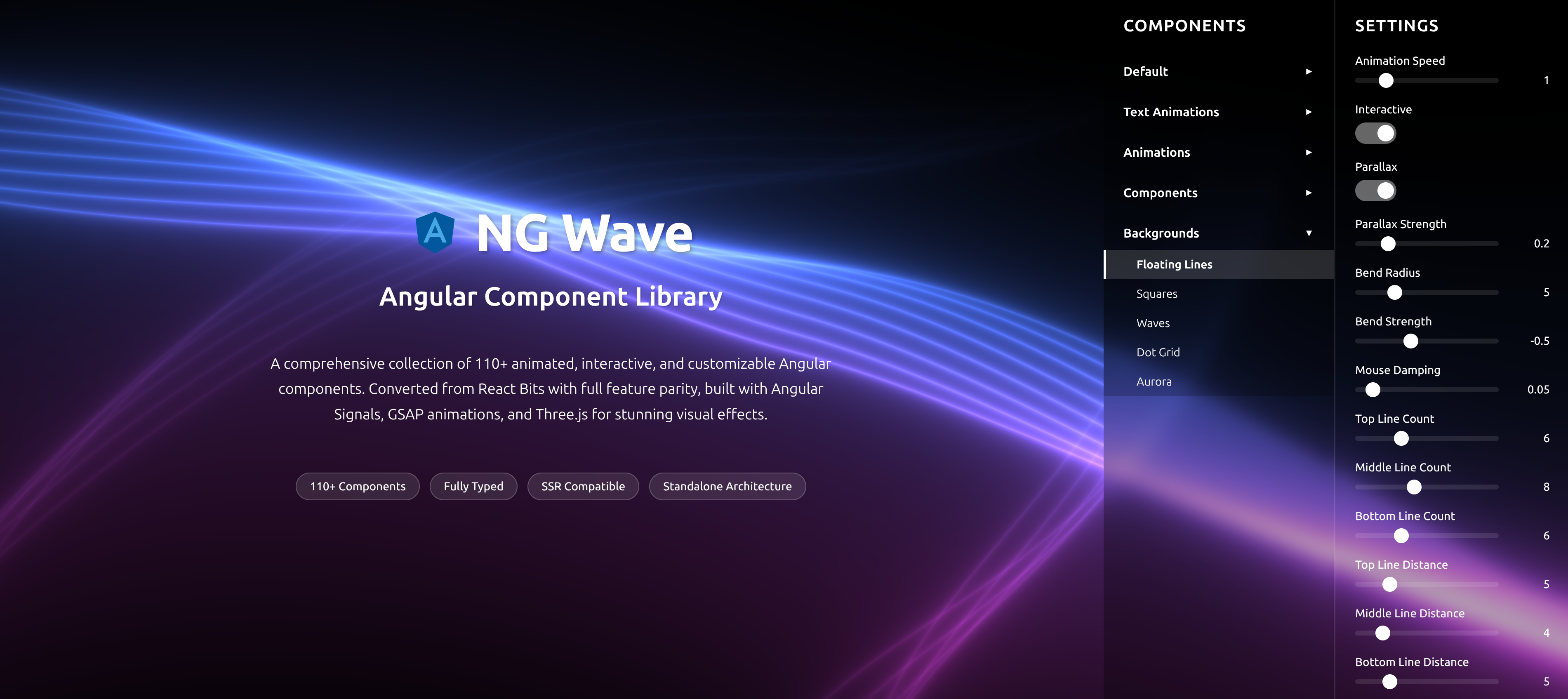
If your Angular app looks like five products, let’s align it without breaking prod. Review my live work at NG Wave (animated components built with Signals), the AI‑powered verification system at IntegrityLens, and the adaptive interview platform SageStepper. Then let’s discuss your Angular roadmap.
Key takeaways
- Tokenize everything first: color, spacing, typography, and density via CSS variables so updates are surgical and measurable.
- Wrap third‑party components (PrimeNG) behind a small façade and theme via CSS variables to avoid forked styles.
- Drive theme/density with Signals + SignalStore for instant, testable UX changes without zone.js hacks.
- Roll out with feature flags, per‑route canaries, and Lighthouse/INP budgets to avoid breaking production.
- Document components in a gallery (Storybook/NG Wave) so design and engineering share the same source of truth.
Implementation checklist
- Inventory current colors, font sizes, spacing, and component variants; map to design tokens.
- Create CSS variables for color, typography scale, spacing, radius, elevation, and density.
- Introduce a ThemeStore (Signals + SignalStore) for theme, density, and high‑contrast state.
- Theme PrimeNG via CSS variables; wrap commonly used components behind DS‑Button, DS‑Input, etc.
- Add route‑level feature flags (Firebase Remote Config) to canary the new design system.
- Measure before/after with Lighthouse CI, INP, and bundle budgets in Nx/CI.
- Document in a component gallery; require visual diffs for new components.
- Train the team on tokens and forbid raw hex/px in PRs with ESLint style rules.
Questions we hear from teams
- How much does it cost to hire an Angular developer to retrofit a design system?
- Most retrofits span 3–6 weeks. I offer fixed‑price discovery and week‑to‑week execution. Expect a focused engagement to start around a few weeks of senior time, with clear milestones and CI gates to keep risk low.
- What does a design‑system retrofit involve for a legacy Angular app?
- Token inventory, CSS variables, a Signals‑driven ThemeStore, PrimeNG wrapper components, and a staged rollout with feature flags. We add CI budgets (Lighthouse, INP) and a component gallery so future changes are predictable.
- Will this break our production app?
- The plan uses route‑level canaries, feature flags, and Firebase Hosting previews. We measure LCP/INP and a11y in CI. If metrics regress, the flag turns off. Zero‑drama rollouts are the standard.
- Can this work with our existing PrimeNG or Angular Material setup?
- Yes. We theme via CSS variables and introduce thin DS wrappers so you don’t fork component libraries. Upgrades become easier because styles live in tokens, not per‑component overrides.
- How long until users see improvement?
- In week one we usually ship typography, spacing, and color fixes to a canary route. Most teams see immediate readability and contrast gains without layout breakage.
Ready to level up your Angular experience?
Let AngularUX review your Signals roadmap, design system, or SSR deployment plan.
NG Wave
Angular Component Library
A comprehensive collection of 110+ animated, interactive, and customizable Angular components. Converted from React Bits with full feature parity, built with Angular Signals, GSAP animations, and Three.js for stunning visual effects.
Explore Components