Ship Angular SSR on Firebase Hosting (Angular 20+): Hydration Metrics, Bundle Budgets, and Functions Guardrails
A battle‑tested path to Angular Universal on Firebase Hosting with instrumented hydration, CI‑enforced bundle budgets, and Cloud Functions guardrails that keep TTFB low and uptime high.
SSR isn’t a checkbox—it’s a contract: fast HTML, fast hydration, and guardrails that keep both true on every commit.Back to all posts
I’ve shipped Angular SSR for dashboards in media, telecom, and SaaS—usually after a well‑meaning “let’s just turn on SSR” trial balloons into 4s TTFB spikes and flaky builds. The fix isn’t magic; it’s metrics, budgets, and guardrails.
If you need a remote Angular developer or Angular consultant who can land SSR on Firebase Hosting without breaking production, here’s the exact playbook I use—Angular 20+, Signals/SignalStore friendly, Nx‑ready, and measurable.
Why Angular SSR on Firebase Hosting slows down without metrics and guardrails
The real-world failure modes
I’ve seen teams enable Angular Universal, push to Firebase Hosting, then discover some geos get 3–4s TTFB because Functions defaulted to the wrong region and memory. Others shipped without HTML cache headers, so every request hit SSR. Worst: no budgets, so hydration silently grew from 180ms to 600ms over a quarter.
Cold starts and unbounded concurrency
No cache headers for HTML
Hydration jank from oversized bundles
CI passes despite size regressions
Bots hammering dynamic routes
As companies plan 2025 Angular roadmaps
If you plan to hire an Angular developer or bring in an Angular consultant, insist on SSR metrics from day one: server render time (ms), hydration time (ms), and Core Web Vitals. These numbers de‑risk your roadmap and make exec updates easy.
Angular 20+ hydration is stable and fast
Signals/SignalStore work great with SSR
Firebase Hosting CDN is production‑grade
Implementation: SSR on Firebase Hosting with CI guardrails
1) Add SSR to an Angular 20+ app
Run the Angular builder to wire server output and hydration.
bash
ng add @angular/ssr # Angular 20+
This produces a server build (server.mjs) and enables hydration on the client. If you’re using Nx, your targets will be apps/my-app:build (browser) and apps/my-app:server (server).
Works with Nx and standalone APIs
Signals/SignalStore compatible
2) Instrument hydration metrics
main.ts (browser):
typescript
import { bootstrapApplication } from '@angular/platform-browser';
import { provideClientHydration } from '@angular/platform-browser';
import { AppComponent } from './app/app.component';
import { ApplicationRef } from '@angular/core';
import { filter, take } from 'rxjs/operators';
performance.mark('ng-hydration-start');
bootstrapApplication(AppComponent, {
providers: [provideClientHydration()]
}).then((appRef: ApplicationRef) => {
appRef.isStable.pipe(filter(Boolean), take(1)).subscribe(() => {
performance.mark('ng-hydration-end');
const measure = performance.measure('ng-hydration', 'ng-hydration-start', 'ng-hydration-end');
const duration = Math.round(measure.duration);
(window as any).__ux = { hydrationMs: duration };
console.info([Hydration] ${duration}ms);
// Optional: GA4/Firebase Analytics
// import { getAnalytics, logEvent } from 'firebase/analytics';
// logEvent(getAnalytics(), 'hydration_ms', { value: duration });
});
});
This uses ApplicationRef.isStable to mark hydration completion. On enterprise dashboards (PrimeNG + custom charts), I target <250ms p50 on desktop, <450ms on mid‑range mobile.
Track hydration in ms using performance marks
Send to logs/analytics for dashboards
3) Server render metrics + guardrails
functions/src/index.ts (simplified):
typescript
import { onRequest } from 'firebase-functions/v2/https';
import { logger } from 'firebase-functions';
import { performance } from 'perf_hooks';
import path from 'node:path';
let angularServer: any; // lazy-loaded SSR handler
export const ssr = onRequest({
region: 'us-central1', // pick near majority traffic
memory: '1GiB', // avoid CPU-throttled cold starts
cpu: 1,
concurrency: 80, // tune with load tests
timeoutSeconds: 60,
maxInstances: 50,
invoker: 'public'
}, async (req, res) => {
const t0 = performance.now();
try {
if (!angularServer) {
// Angular builder emits dist/
const mod = await import(path.join(process.cwd(), 'dist/my-app/server/server.mjs'));
// Most Angular SSR builds export an express-style handler factory
angularServer = typeof mod.app === 'function' ? mod.app() : mod.default ?? mod;
}
// Short CDN cache for HTML; immutable for assets (set in hosting headers)
res.setHeader('Cache-Control', 'public, max-age=0, s-maxage=60, stale-while-revalidate=300');

await angularServer(req, res);
} catch (err) {
logger.error('SSR error', err as Error);
// Fallback to CSR shell so users aren’t blocked
res.setHeader('Cache-Control', 'public, max-age=60');
res.status(200).send('');
} finally {
logger.info('ssr_ms', { path: req.path, ms: Math.round(performance.now() - t0) });
}
});
Cloud Functions v2 supports ESM and high concurrency. With s-maxage + SWR, the CDN serves a fresh SSR response for up to 60s and revalidates in the background—great for marketing pages and signed‑out routes of dashboards. For highly personalized dashboards, keep s-maxage small or conditional.
Functions v2 with region/memory/concurrency
SWR cache headers to keep SSR affordable
Graceful fallback to CSR on error
4) Firebase Hosting rewrites and headers
firebase.json:
json
{
"hosting": {
"public": "dist/my-app/browser",
"ignore": ["/.*"],
"headers": [
{ "source": "/.js", "headers": [{ "key": "Cache-Control", "value": "public, max-age=31536000, immutable" }] },
{ "source": "**/.css", "headers": [{ "key": "Cache-Control", "value": "public, max-age=31536000, immutable" }] },
{ "source": "index.html", "headers": [{ "key": "Cache-Control", "value": "public, max-age=0, must-revalidate" }] }
],
"rewrites": [
{ "source": "**", "function": { "functionId": "ssr", "region": "us-central1" } }
]
}
}
Hosting keeps your static assets at CDN speeds; the rewrite punts HTML to the SSR function with your guardrails.
Immutable assets; SSR for everything else
Index no-cache; assets forever-cache
5) CI that fails on budgets (before prod)
angular.json (browser + server budgets):
json
{
"projects": {
"my-app": {
"architect": {
"build": {
"configurations": {
"production": {
"budgets": [
{ "type": "initial", "maximumWarning": "350kb", "maximumError": "400kb" },
{ "type": "bundle", "name": "main", "maximumWarning": "280kb", "maximumError": "320kb" },
{ "type": "anyComponentStyle", "maximumWarning": "10kb", "maximumError": "20kb" }
]
}
}
},
"server": {
"configurations": {
"production": {
"budgets": [ { "type": "any", "maximumWarning": "4mb", "maximumError": "6mb" } ]
}
}
}
}
}
}
}
GitHub Actions (build + deploy):
yaml
name: ssr-deploy
on: { push: { branches: [main] }, pull_request: {} }
jobs:
ci:
runs-on: ubuntu-latest
steps:
- uses: actions/checkout@v4
- uses: actions/setup-node@v4
with: { node-version: 20 }
- run: npm ci
- run: npx nx run my-app:build:production
- run: npx nx run my-app:server:production
- name: Deploy preview (PR)
if: ${{ github.event_name == 'pull_request' }}
run: npx firebase hosting:channel:deploy pr-${{ github.event.number }} --project $FIREBASE_PROJECT --token $FIREBASE_TOKEN --expires 7d
- name: Deploy main
if: ${{ github.ref == 'refs/heads/main' }}
run: npx firebase deploy --only hosting,functions --project $FIREBASE_PROJECT --token $FIREBASE_TOKEN --non-interactive
Budgets cause ng build to fail with a non‑zero exit—exactly the guardrail you want when a library or chart grows unexpectedly.
Budgets for browser and server
Preview channels for PRs
6) Bot and route guardrails
If SEO is only for marketing pages, SSR only those paths and send authenticated dashboard traffic to CSR. You can also route bots (User‑Agent checks) to prerendered HTML while humans get short‑cached SSR. Keep a typed allow‑list so admin, device, and telemetry routes never SSR by mistake.
Serve prerender to bots where possible
Allow‑list SSR routes in heavy apps
Protect admin APIs from SSR
Example numbers from recent deploys
For code rescue or modernization alongside SSR, see how I stabilize and modernize apps at gitPlumbers—useful if your codebase has drifted due to AI‑generated patches or legacy patterns.
Telecom analytics dashboard (Firebase Hosting + Functions v2)
We split auth + dashboards: SSR for marketing/signed‑out, CSR for signed‑in. Added s-maxage=60 + SWR, region pinned to us-central1. Budgets flagged a chart library bump that would have pushed hydration past 300ms; we code‑split that path.
LCP 2.8s → 1.6s on 4G
Hydration p50 210ms → 170ms after budgets
Server render p50 120ms (warm)
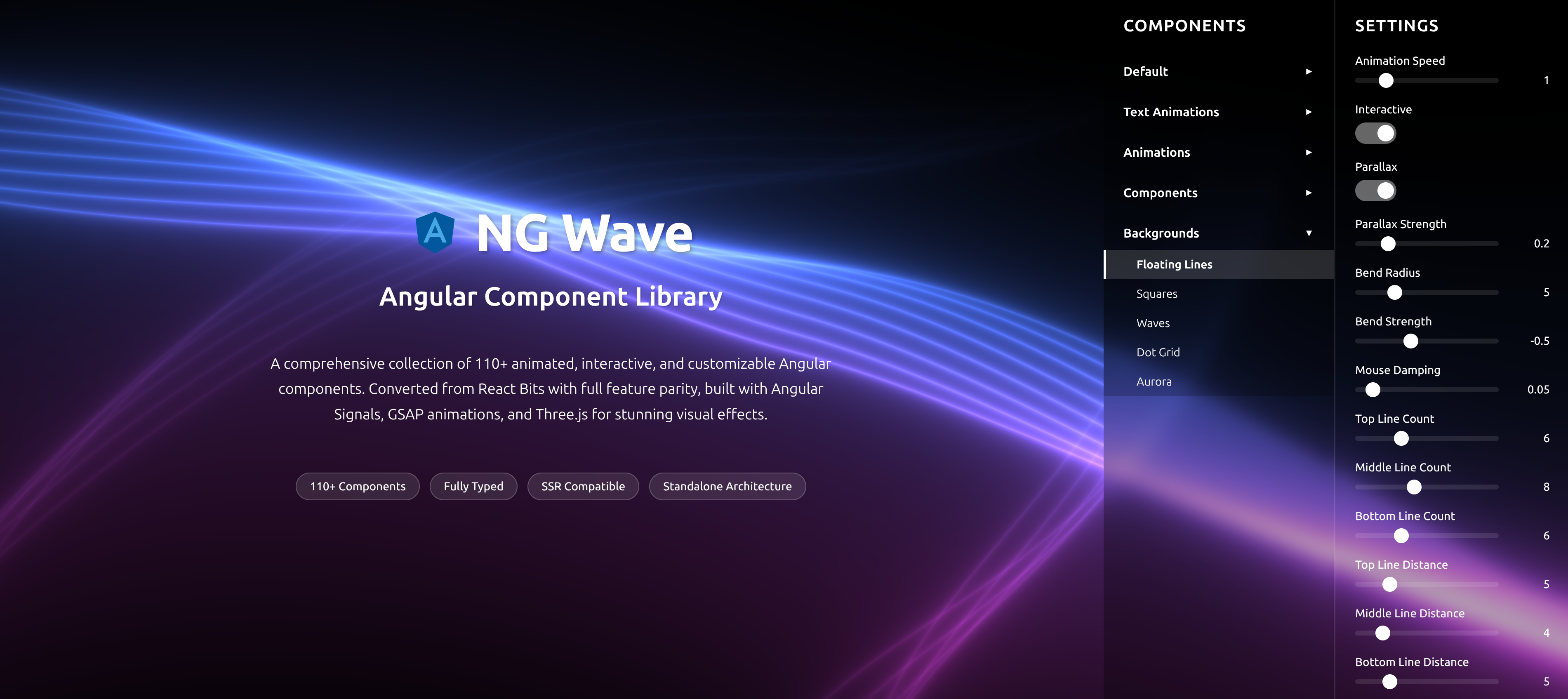
NG Wave component library (public demo)
See animated Angular components at the NG Wave component library. Signals‑heavy components hydrate cleanly with <200ms p50 on mid‑range laptops.
Immutable assets, 0 cache misses after first hit
Hydration telemetry piped to BigQuery
When to hire an Angular developer for SSR
If you need an Angular expert to stand up SSR, hydrate fast, and keep it stable on Firebase, I’m available as a remote Angular consultant. We can review your Angular roadmap and deploy a preview environment within a week.
You need SSR + CI in 2–4 weeks
You’re chasing SEO but can’t afford downtime
You want hard numbers in stakeholder decks
How an Angular consultant approaches SSR, hydration, and guardrails
Step-by-step
I treat SSR like any platform change: prove it on a small surface, instrument it, and roll it out with guardrails. Signals/SignalStore make it easier to keep hydration deterministic, and PrimeNG offers fast accessible primitives that don’t fight Universal.
Baseline: LCP/INP + hydration p50/p95
SSR pilot on 1–2 routes
Budgets + CI + preview channels
Functions guardrails + load test
Rollout + alerting
Typed telemetry
For real‑time dashboards (ads, telematics), I keep typed event schemas and join SSR logs (server_ms) with client hydration_ms so we can pinpoint where time goes. Angular DevTools flame charts help validate render counts when debugging slow components.
WebSocket/HTTP schemas for events
RUM + server logs joined by request ID
Takeaways and next steps
What to instrument next
With these in place, your Firebase‑hosted Angular SSR is fast, observable, and resilient. From here, consider adding consent‑aware RUM, Lighthouse CI, and a canary release path. When you’re ready to discuss your Angular roadmap, I’m happy to help.
Hydration p50/p95 by route
Server render warm/cold by region
Cache hit rate at CDN layer
Budget regressions in PRs
Key takeaways
- SSR without metrics is guesswork—instrument hydration and server render time on day one.
- CI bundle budgets should fail builds before regressions reach prod.
- Functions v2 guardrails (region, concurrency, memory, caching) turn SSR from fragile to reliable.
- Firebase Hosting can serve static assets at CDN speed while Functions handles SSR with s-maxage + SWR.
- Hydration metrics + Core Web Vitals give recruiters and directors board‑ready numbers.
Implementation checklist
- ng add @angular/ssr and verify server build outputs
- Instrument hydration with performance marks and ApplicationRef.isStable
- Set CI budgets for browser and server bundles; fail on regression
- Configure Firebase Hosting headers + rewrites to Functions v2
- Set Functions guardrails: region, concurrency, memory, s-maxage, graceful fallbacks
- Log SSR duration and hydration to analytics/telemetry
- Preview deployments via Hosting channels before main release
- Track LCP/INP and hydration in dashboards; alert on drift
Questions we hear from teams
- How long does an Angular SSR rollout to Firebase Hosting take?
- Typical engagements are 2–4 weeks: week 1 instrumentation and pilot routes, week 2 guardrails and CI budgets, weeks 3–4 rollout and load testing. I can start a discovery call within 48 hours and deliver an assessment in one week.
- Do we need Cloud Run or are Cloud Functions fine for Angular SSR?
- Cloud Functions v2 works great for most SSR use cases. If you need custom networking, higher CPU, or private VPCs, Cloud Run can be a better fit. I’ve deployed both; the guardrails and metrics approach stays the same.
- What bundle budget numbers should we start with?
- For enterprise dashboards: initial ≤350 KB warn, 400 KB fail; main bundle ≤280/320 KB; any component style ≤10/20 KB. Server bundle warn at 4 MB, fail at 6 MB. Tune after measuring your real traffic and hydration.
- Will Signals/SignalStore work with SSR and hydration?
- Yes. Signals and SignalStore hydrate cleanly on Angular 20+. Keep side effects out of templates, avoid non‑deterministic initializers, and gate WebSocket/HTTP starts until after hydration for the best UX.
- How much does it cost to hire an Angular developer for this work?
- It depends on scope. A focused SSR + metrics + guardrails engagement usually lands in the low five figures. If you need legacy rescue plus SSR, we’ll scope it together. I’m available as a remote Angular consultant or contract Angular developer.
Ready to level up your Angular experience?
Let AngularUX review your Signals roadmap, design system, or SSR deployment plan.
NG Wave
Angular Component Library
A comprehensive collection of 110+ animated, interactive, and customizable Angular components. Converted from React Bits with full feature parity, built with Angular Signals, GSAP animations, and Three.js for stunning visual effects.
Explore Components