Ship Angular SSR on Firebase Hosting (Angular 20+): Hydration Metrics, Bundle Budgets, and Functions Guardrails
A field-tested playbook to deploy Angular 20+ SSR on Firebase Hosting with real hydration metrics, CI bundle budgets, and Cloud Functions guardrails—fast, safe, measurable.
SSR without guardrails is a gamble. Instrument hydration, enforce budgets, and constrain Functions—then you can ship fast without waking up PagerDuty.Back to all posts
I’ve shipped SSR to Firebase Hosting for dashboards that couldn’t afford a flicker—airport kiosks that must hydrate instantly even when offline recovers, and analytics apps where an SEO crawl must see complete content on first request. This is the playbook I use on Angular 20+ with Signals, Nx, and Firebase.
If you’re planning Q1 upgrades or looking to hire an Angular developer to deliver SSR safely, this guide shows the exact guardrails—hydration metrics, bundle budgets, and Cloud Functions constraints—that keep performance predictable and costs under control.
These patterns are battle‑tested across enterprise dashboards, multi‑tenant portals, and AI‑assisted products like IntegrityLens (Firebase + Angular 20+, 12k+ interviews).
The Real-World SSR Problem: Fast TTFB, Slow Hydration
What I see in audits
I’ve been pulled into teams where SSR was “done,” yet dashboards jittered while Signals hydrated and charts attached event handlers. Fixing this isn’t about one magical tweak—it’s about instrumenting hydration, guarding bundles, and constraining Functions so they behave under real load.
TTFB looks good on SSR, but hydration stalls at 1.2–2.0s on mid‑range devices.
Bundles creep past 350–450KB, pushing INP and CLS in logged-in flows.
Cloud Functions cold starts spike p95 response times during morning traffic.
Why Angular 20+ Teams Should Care About Hydration and Guardrails
Business impact
As enterprise budgets reset, leadership expects numbers. If you’re evaluating whether to hire an Angular consultant, ask for hydration p95, SSR render time p95, and bundle deltas per PR. Those three lines on a dashboard tell you if SSR is a win or a liability.
Hydration time directly affects INP and perceived stability.
Predictable SSR renders reduce bounce from b2b SEO and bot crawlers.
Functions guardrails prevent surprise bills and 9am cold‑start spikes.
Implement Firebase Hosting SSR with Cloud Functions v2
// firebase.json
{
  "hosting": {
    "public": "dist/browser",
    "ignore": ["firebase.json", "**/.*", "**/node_modules/**"],
    "headers": [
      {"source": "**/*.@(js|css)", "headers": [{"key": "Cache-Control", "value": "public,max-age=31536000,immutable"}]},
      {"source": "**/*.@(png|jpg|svg|webp)", "headers": [{"key": "Cache-Control", "value": "public,max-age=31536000,immutable"}]},
      {"source": "**", "headers": [{"key": "Cache-Control", "value": "no-store"}]}
    ],
    "rewrites": [{ "source": "**", "function": "ssr" }]
  }
}
// functions/src/index.ts
import { onRequest } from 'firebase-functions/v2/https';
import * as logger from 'firebase-functions/logger';
// Import your compiled SSR server entry (built via ng build --configuration=production && ng run app:server)
// The exported handler should accept (req, res) and render Angular via CommonEngine or your server module.
// eslint-disable-next-line @typescript-eslint/no-var-requires
const { handleRequest } = require('../ssr/main');
export const ssr = onRequest({
region: 'us-central1',
memory: '512MiB',
timeoutSeconds: 60,
minInstances: 1,
maxInstances: 10,
concurrency: 40,
}, async (req, res) => {
const start = Date.now();
try {
await handleRequest(req, res);
const ms = Date.now() - start;
logger.info('SSR render', { path: req.originalUrl, ms, status: res.statusCode });
} catch (e) {
logger.error('SSR error', { error: (e as Error).message, path: req.originalUrl });
res.status(500).send('SSR error');
}
});// server/main.ts (simplified)
import 'zone.js/node';
import type { Request, Response } from 'express';
import { CommonEngine } from '@angular/ssr';
import { APP_BASE_HREF } from '@angular/common';
import { AppComponent } from './app/app.component';
import { provideServerRendering } from '@angular/platform-server';
const engine = new CommonEngine();
export async function handleRequest(req: Request, res: Response) {
const html = await engine.render({
bootstrap: AppComponent,
providers: [
provideServerRendering(),
{ provide: APP_BASE_HREF, useValue: req.baseUrl },
],
url: req.originalUrl,
});
res.setHeader('Content-Type', 'text/html');
res.status(200).send(html);
}# .github/workflows/ci.yml (excerpt)
name: ci
on: [push, pull_request]
jobs:
build-deploy:
runs-on: ubuntu-latest
steps:
- uses: actions/checkout@v4
- uses: actions/setup-node@v4
with: { node-version: 20 }
- run: corepack enable && pnpm i --frozen-lockfile
- run: pnpm nx run-many -t lint,test --parallel=3
- run: pnpm nx build app --configuration=production --stats-json
- run: pnpm nx run app:server --configuration=production
- name: Fail on bundle budget regressions
run: node tools/verify-budgets.mjs dist/app/browser/stats.json
- name: Deploy to preview channel
run: |
npm i -g firebase-tools
firebase deploy --only hosting,functions:ssr --project ${{ secrets.FB_PROJECT }} --token ${{ secrets.FIREBASE_TOKEN }} --non-interactive1) Angular 20+ SSR build
Generate SSR with the Angular CLI, keep server and client entries clean, and enable hydration.
Make sure any RxJS streams are adapted deterministically to Signals to avoid hydration mismatches.
2) Firebase Hosting + Functions config
Use Hosting rewrites to a v2 HTTPS Function and apply aggressive caching to static assets.
3) Guardrails in Functions
Constrain region, memory, timeout, concurrency, and minInstances to smooth p95s and avoid cold starts.
4) Nx + GitHub Actions pipeline
Build once, test budgets, deploy to a preview channel, run Lighthouse, then promote on green.
Measure Hydration in the Browser and Render Time on the Server
// main.client.ts (Angular 20+)
import { bootstrapApplication, ApplicationRef, provideClientHydration, afterNextRender } from '@angular/core';
import { AppComponent } from './app/app.component';

function reportHydration(duration: number) {
  const payload = JSON.stringify({ metric: 'hydrationMs', duration, ts: Date.now() });
  navigator.sendBeacon?.('/metrics', payload);
}

const start = performance.now();

bootstrapApplication(AppComponent, { providers: [provideClientHydration()] })
  .then(appRef => {
    const injector = (appRef as ApplicationRef).injector;
    afterNextRender(() => {
      // first stable frame after hydration
      const end = performance.now();
      reportHydration(end - start);
    });
  });
Client-side hydration metric
Mark the moment hydration begins and ends using provideClientHydration, afterNextRender, and the Performance API. Send it via sendBeacon to a metrics endpoint or Firebase Analytics.
Server-side SSR render metric
Time the SSR render in your Function (already shown) and log p50/p95 in dashboards (Cloud Logging, BigQuery).
Alert on drift
Set SLOs (e.g., hydration p95 < 900ms, SSR render p95 < 250ms). Alert when thresholds are exceeded.
CI Bundle Budgets That Prevent Regressions
// angular.json (budgets excerpt)
{
  "projects": {
    "app": {
      "architect": {
        "build": {
          "configurations": {
            "production": {
              "budgets": [
                { "type": "initial", "maximumWarning": "280kb", "maximumError": "320kb" },
                { "type": "anyComponentStyle", "maximumWarning": "8kb", "maximumError": "12kb" },
                { "type": "anyScript", "maximumWarning": "600kb", "maximumError": "700kb" },
                { "type": "any", "maximumWarning": "800kb", "maximumError": "900kb" }
              ]
            }
          }
        }
      }
    }
  }
}
angular.json budgets
Set initial, lazy, and anyComponentStyle budgets. Keep tight thresholds in production builds.
CI fail-fast
Let ng build fail on exceed or parse stats.json for deltas vs. main. Share the chart in PRs so PMs see risk early.
Functions Guardrails: Region, Concurrency, and Cold Starts
// firebase.json (headers excerpt)
{
  "hosting": {
    "headers": [
      {"source": "**/*.@(js|css)", "headers": [{"key": "Cache-Control", "value": "public,max-age=31536000,immutable"}]},
      {"source": "**", "headers": [
        {"key": "Cache-Control", "value": "no-store"},
        {"key": "X-Content-Type-Options", "value": "nosniff"}
      ]}
    ]
  }
}
Guardrails that matter
I’ve seen teams chase ghosts that were just cold starts. Setting minInstances:1 on SSR usually pays for itself if you have steady traffic. Use preview channels to validate the cost curve before promoting.
region: near your users and Hosting site
minInstances: 1 for steady-state traffic, higher for morning spikes
concurrency: cap per-instance load to protect p95
timeout/memory: right-size to avoid timeouts or thrash
Headers and caching
Cache static assets for 1 year with immutable. Keep HTML no-store. Add security headers (CSP, X-Content-Type-Options).
Example Results: IntegrityLens and Airline Kiosk
IntegrityLens (Angular + Firebase + AI)
For the AI-powered verification system at IntegrityLens, SSR on Firebase Hosting improved first-content experience for candidates on 3G fallback. Hydration metrics fed into GA4 and BigQuery to spot regional variance. See the platform: AI-powered verification system at getintegritylens.com.
38% faster p95 TTFB after SSR
Hydration p95 from 1.1s to 670ms on mid-range phones
0 bundle regressions after budgets + CI
Airline kiosk (offline-tolerant)
We used SSR for instant screen paint and Signals to attach peripheral state (barcode, printer) without jitter. The same Function guardrails kept morning-departure spikes predictable.
Docker-based hardware simulation
SSR + cache-first routes for boarding flows
Peripheral readiness state surfaced during hydration
When to Hire an Angular Developer for Firebase SSR Delivery
Bring in help if you see
If you need a remote Angular developer with Fortune 100 experience to stabilize delivery, I can help. I’ve rescued SSR pipelines, upgraded Angular 11→20 with zero downtime, and hardened telemetry so defects reproduce fast. Start with a free assessment: discuss your Angular project at angularux.com/pages/contact.
Flicker or event re-binding during hydration
p95 SSR > 300ms or cold starts during traffic spikes
Bundles creeping past budgets with no owner
No preview channels or rollback plan
Concise Takeaways and Next Steps
- Measure what matters: hydration p95 and SSR render p95.
- Guard what matters: budgets in CI and Functions limits.
- Ship safely: preview channels, Lighthouse checks, and zero‑downtime promotes.
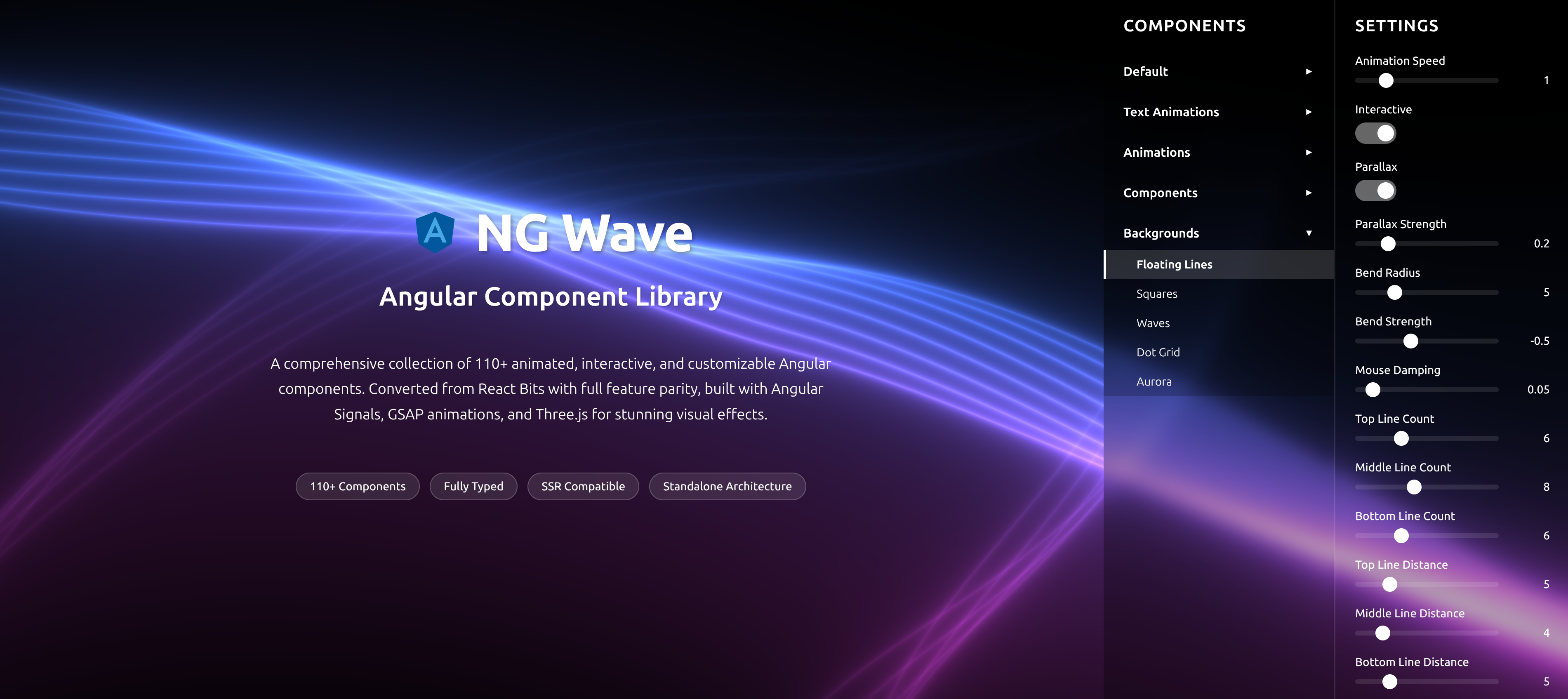
If you’re ready to lock this down, review your build with me. See NG Wave component library for Signals-driven UI at ngwave.angularux.com and stabilize your Angular codebase with gitPlumbers code rescue. Then let’s ship your Firebase SSR with numbers you can show to leadership.
Key takeaways
- Instrument hydration timing on the client and render timing on the server—alert when SLIs drift.
- Enforce bundle budgets in angular.json and fail CI on regression to protect Core Web Vitals.
- Constrain Cloud Functions v2 with region, memory, concurrency, and minInstances to avoid cold starts.
- Use Firebase Hosting preview channels for zero‑downtime releases and safe rollbacks.
- Ship SSR deterministically with Signals + typed adapters so hydration remains stable.
Implementation checklist
- Enable provideClientHydration and verify deterministic SSR with Angular DevTools.
- Add performance marks in main.client.ts and ship a /metrics endpoint or Analytics event.
- Set budgets for initial, lazy, and anyComponentStyle in angular.json; make CI fail on exceed.
- Deploy Cloud Functions v2 with region, memory, timeout, minInstances, and concurrency.
- Cache static assets for 1 year; no-store for HTML. Set security headers in firebase.json.
- Use preview channels for PRs; promote to live on green Lighthouse and bundle checks.
- Log SSR render duration in Functions logs; alert via Error Reporting when thresholds exceeded.
Questions we hear from teams
- How long does an Angular SSR on Firebase deployment take?
- Typical engagements: 1–2 weeks for a greenfield SSR setup, 2–4 weeks for legacy rescue with budgets, metrics, and guardrails. Discovery call within 48 hours, assessment delivered within 1 week.
- How much does it cost to hire an Angular developer for SSR delivery?
- Fixed-scope SSR setup with metrics and budgets usually starts at a few thousand USD. Complex legacy rescues or multi-tenant portals vary. I provide a capped estimate after a brief code review and environment check.
- What guardrails should we enable in Cloud Functions for SSR?
- Set region close to users, minInstances:1 for steady traffic, cap concurrency (20–60), and right-size memory/timeout. Log SSR render time and alert when p95 drifts. Cache static assets aggressively; HTML no-store.
- Will Angular Signals affect SSR hydration stability?
- Signals are deterministic when you avoid non-deterministic subscriptions during render. Use typed adapters for RxJS streams and keep side effects out of render paths. Test hydration with Angular DevTools and CI.
- What’s involved in a typical engagement?
- Assessment, SSR build + Functions wrapper, hydration metrics instrumentation, CI bundle budgets, preview channels, and guardrails. We finish with a report: p50/p95 metrics, cost notes, and a promote/rollback plan.
Ready to level up your Angular experience?
Let AngularUX review your Signals roadmap, design system, or SSR deployment plan.
NG Wave
Angular Component Library
A comprehensive collection of 110+ animated, interactive, and customizable Angular components. Converted from React Bits with full feature parity, built with Angular Signals, GSAP animations, and Three.js for stunning visual effects.
Explore Components