Zero‑Downtime Angular 10–15 to 20: A Field‑Proven Upgrade Plan That Survives Prod
A practical, measured path to upgrade Angular 10–15 apps to 20 without user impact—covering deprecations, CI test strategy, and real rollback options.
Upgrades don’t earn applause—silence does. Aim for a deploy your users never notice.Back to all posts
The deploy nobody notices is the one that wins
Why listen to me?
I’ve upgraded Angular apps in production windows where a 30‑minute blip would cost a telecom millions in ad spend and a major airline thousands in kiosk check‑ins. The playbook below is what I use as a remote Angular consultant to move Angular 10–15 apps to 20+ with zero downtime—using Nx, Signals/SignalStore where appropriate, PrimeNG/Material upgrades, Firebase previews, and CI gates that fail fast before customers ever notice.
What zero‑downtime means here
Zero‑downtime isn’t hype; it’s a measurable promise. We’ll baseline metrics first, then only ship when those numbers hold.
No 5xx spikes or auth drops during cutover
Stable INP/LCP within ±5% of baseline
Rollback verified in rehearsal (under 5 minutes)
Why Angular 10–15 apps break during 20 upgrades
Common break points to plan for
Most incidents I see aren’t Angular itself—they’re build tool changes, typed forms assumptions, or third‑party component theming. Treat each as a work item with an owner and a test.
CLI builder change to Vite (vite dev server, asset handling)
TypeScript 5.x and stricter template/type checks
Typed Reactive Forms (v14+) and form value changes
RxJS 8 interop (pipeable operators, deprecated APIs)
Zone flags and increasingly zoneless patterns
Angular Material theming API updates; PrimeNG major versions
ES target changes and removed polyfills
Deprecation triage
Don’t YOLO the codebase. Inventory deprecations and group them by impact so your CI can light up the highest‑risk areas first.
Scan with ng update --force --from and Angular ESLint rules
Generate a deprecations spreadsheet linked to owners/tests
Stage fixes by risk: build, auth, routing, state, UI polish
Implementation checklist: plan, canaries, cutover, rollback
bash commands to lock upgrades:
# Toolchain-first approach
npx nx migrate latest
pnpm install  # or npm ci

# Upgrade Angular to 20 (CLI + Core)
ng update @angular/cli@20 @angular/core@20 --force

# Common companions
ng update @angular/material@^17  # if applicable
pnpm add rxjs@^8

# Verify Vite builder is active
cat angular.json | grep -i vite || echo "Switch to Vite builder"
GitHub Actions CI gate with canary + budgets:
name: upgrade-ci
on: [push]
jobs:
  build-test:
    runs-on: ubuntu-latest
    steps:
      - uses: actions/checkout@v4
      - uses: pnpm/action-setup@v3
        with: { version: 9 }
      - run: pnpm install --frozen-lockfile
      - run: pnpm nx affected -t lint,test,build --parallel=3
      - name: E2E smoke (Cypress)
        run: pnpm nx run app-e2e:e2e --config baseUrl=${{ secrets.CANARY_URL }}
      - name: Lighthouse CI budgets
        uses: treosh/lighthouse-ci-action@v11
        with:
          urls: |
            ${{ secrets.CANARY_URL }}/
            ${{ secrets.CANARY_URL }}/dashboard
          budgetPath: ./lighthouse.budgets.json
1) Branch, pin, baseline
Lock the starting line. I snapshot GA4/Firebase Logs trends and Lighthouse scores so I can prove we didn’t regress after cutover.
Create upgrade branch and lock package manager (pnpm/npm/yarn)
Record baseline: error rate, INP/LCP, 95th route times, SSR hydration time
Enable preview envs (Firebase Hosting channels, CloudFront, or Azure SWA)
2) Upgrade the toolchain first
Upgrade the CLI/builder before app code so failures are obvious and localizable. With Nx, use migrate then run affected to keep iterations fast.
Angular CLI to 20 with Vite builder
TypeScript and tsconfig targets
Nx migrate and affected graph
3) Run codemods, then fix deprecations
Automate what you can, then work the remaining warnings like a backlog item with tests per change.
ng update @angular/core@20 @angular/cli@20
Update RxJS, Angular Material/PrimeNG per major
Turn on stricter template checks early
4) Add canaries and flags
Flags are not just for features—they’re for deploys. Canary the new build to a safe cohort and compare telemetry to baseline.
Dark‑launch the upgraded app to internal org IPs
Use Firebase Remote Config or environment flags
Ship a canary route or cohort to 5–10% traffic
5) Rehearse rollback
Practice the revert. A rollback you’ve never tested isn’t a rollback; it’s a hope.
Blue/green in hosting (two versions live)
Backwards‑compatible DB migrations (expand/contract)
Asset version pinning at CDN and config toggles
Test strategies that catch regressions before customers do
Unit, integration, and contract tests
I add contract tests against a staging API (or Prism mock) to pin response shapes. It prevents silent runtime errors when typed forms or interceptors change.
Contract tests pin API assumptions for critical flows
Integration tests for routing, guards, interceptors
Angular TestBed with HttpTestingController for happy/edge paths
Cypress smoke flows over canary
We don’t need full regression daily—just a smoke that mirrors your top 5 revenue flows. Save full regression for the release candidate.
Login, dashboard load, search/filter, form submit
Run against the canary URL every push
Fail fast on route errors or console exceptions
Performance and UX budgets
Set numeric budgets and let CI enforce them. If INP slips, I look for over‑eager change detection or table virtualization issues.
Lighthouse CI for LCP/INP/CLS within ±5% baseline
Bundle size guardrails (source-map-explorer)
Angular DevTools flame charts spot render thrash
SSR hydration checks (if SSR enabled)
SSR mismatches cause flicker and state loss. Catch them in CI before a recruiter demos your app on a flaky network.
Hydration warnings treated as failures
Server parity snapshots for critical routes
Rollbacks that actually work in Angular monorepos
Example feature flag service for canary rollout:
import { inject, Injectable, signal, computed } from '@angular/core';
import { RemoteConfig } from '@angular/fire/remote-config';

@Injectable({ providedIn: 'root' })
export class FeatureFlags {
  private rc = inject(RemoteConfig);
  private _percent = signal(0); // 0..100 pulled from RC
  private _userHash = signal<number>(Math.floor(Math.random() * 100));

  isUpgradeEnabled = computed(() => this._userHash() < this._percent());

  async load() {
    // fetch RC and set _percent('upgrade_canary_percent')
    const value = 10; // default 10%
    this._percent.set(value);
  }
}
Blue/green cutover
On Firebase Hosting we keep a live channel and a release channel; on CloudFront, two behaviors with a toggle. Cutover becomes a config change, not a rebuild.
Keep N and N‑1 live behind separate origins
Switch via DNS, edge redirect, or feature flag
Rehearse twice before go‑live
Feature flags with Firebase Remote Config
I prefer Remote Config for instant toggles. Keep a plain env flag as a fallback if RC is unavailable.
Gate upgraded shell by cohort or header
Expose kill‑switch flag in an ops panel
Backwards‑compatible data changes
Coordinate with backend for a week of overlap. Use versioned DTOs or Zod/JSON schema to keep edges honest.
Expand/contract migrations: write N, read N‑1..N
Versioned API endpoints and event schemas
No destructive drops until after stability window
How an Angular consultant approaches Signals during an upgrade
Don’t rebuild state mid‑upgrade
Signals are fantastic in Angular 20+, but mid‑upgrade is not the time for a wholesale state rewrite. Add Signals to high‑ROI components first.
Keep NgRx working; introduce Signals/SignalStore at edges
Bridge RxJS to Signals with toSignal where necessary
Example bridge
import { toSignal } from '@angular/core/rxjs-interop';
import { Store } from '@ngrx/store';

const selectedUser$ = store.select(selectUser);
const selectedUser = toSignal(selectedUser$, { initialValue: null });
Measure change detection wins
Adopt Signals where they buy back INP in hotspots—like heavy dashboards or PrimeNG tables—then expand once stable.
Use Angular DevTools signal graph
Instrument render counts in hot lists/tables
When to hire an Angular developer for legacy rescue
Signals you need outside help
This is where I come in. I’ve rescued AngularJS→Angular rewrites, upgraded an 11→20 analytics dashboard with zero downtime, and stabilized airport kiosk flows with offline‑tolerant UX. If you need a remote Angular developer to steady the ship, I’m available. See how I can help you stabilize your Angular codebase at gitPlumbers.
Multiple majors behind with custom builders
Flaky CI and no preview environments
PrimeNG/Material theming drift and CSS regressions
Unknown deprecations and no rollback plan
Example timeline: telecom analytics 11 → 20
Four‑week plan we ran in production
Outcome: 0 downtime, <0.1% error rate, INP improved 7% from Signals in heavy widgets, bundle down 11% after Vite tweaks. This mirrors patterns I used on employee tracking, IoT device portals, and cloud accounting dashboards.
Week 1: toolchain, Vite, previews, baseline
Week 2: typed forms + RxJS fixes, Cypress smoke
Week 3: canary 10%, Lighthouse budgets, SSR check
Week 4: blue/green cutover, 48‑hour watch, flag cleanup
Upgrade commands and config you can copy
CLI and tsconfig essentials
// tsconfig.json
{
  "compilerOptions": {
    "target": "ES2022",
    "useDefineForClassFields": true,
    "strict": true
  },
  "angularCompilerOptions": { "strictTemplates": true }
}
Nx affected for fast feedback
pnpm nx affected -t build,test,lint --parallel=3 --exclude="*:e2e"Lighthouse budgets example
// lighthouse.budgets.json
[{ "path": "/", "resourceSizes": [{"resourceType":"script","budget":350}],
   "timings": [{"metric":"interactive","budget":4000},{"metric":"total-blocking-time","budget":200}] }]
Final takeaways and next steps
Boil it down
If you want seasoned eyes on your roadmap, I can review your repo and produce a concrete, zero‑downtime upgrade plan in a week. If you’re ready to hire an Angular developer or need an Angular consultant to run the upgrade, let’s talk.
Plan like a migration, not a patch.
Prove safety numerically with CI budgets and canaries.
Make rollback boring—blue/green + backwards‑compatible data.
Key takeaways
- Freeze scope and baseline metrics before touching code—tie success to no downtime, stable error rate, and Core Web Vitals.
- Upgrade toolchain first (CLI, builders, TypeScript), then app code. Use Nx affected and Firebase previews for safe iteration.
- Treat deprecations like a backlog—typed forms, router changes, RxJS v8 interop, Material/PrimeNG theming, Vite builder, ES2022 targets.
- Codify zero‑downtime with canaries, dark‑launch flags, blue/green deploys, and reversible database migrations.
- Prove safety with CI gates: unit, e2e, contract tests, Lighthouse budgets, SSR hydration checks, and real‑time telemetry.
Implementation checklist
- Inventory deprecations and third‑party majors (PrimeNG/Material, RxJS, build tooling).
- Create an upgrade branch and pin toolchain versions (Angular CLI, TypeScript, RxJS).
- Stand up preview environments (Firebase Hosting channels, S3/CloudFront, or Azure Static Web Apps).
- Migrate to Vite builder and Angular 20 CLI; run codemods; fix typed forms.
- Adopt Nx affected pipelines and parallel CI to keep feedback fast.
- Add canary toggles and feature flags; ship to internal only first.
- Run Lighthouse CI, Cypress smoke, and contract tests against staging APIs.
- Plan and test rollback: blue/green, CDN version pinning, backwards‑compatible DB migrations.
- Cut over behind a flag; monitor telemetry (GA4, Firebase Logs) and Core Web Vitals.
- Remove flags after stability window; document upgrade deltas and follow‑ups.
Questions we hear from teams
- How long does an Angular 10–15 to 20 upgrade take?
- For a typical enterprise dashboard, 3–6 weeks is common: 1 week toolchain/baseline, 1–2 weeks deprecations, 1 week canary + budgets, 1 week cutover and watch. Complex monorepos or heavy theming can extend timelines.
- What does a zero‑downtime rollback plan include?
- Blue/green hosting, feature flags to kill the upgraded shell, CDN asset version pinning, and backwards‑compatible DB migrations. Rehearse at least twice; target under 5 minutes to revert.
- Do we need to adopt Signals during the upgrade?
- No. Upgrade first, keep NgRx working, then add Signals/SignalStore to hotspots for measurable INP wins. Bridge via toSignal and expand once stable.
- How much does it cost to hire an Angular consultant for an upgrade?
- Scoped upgrades are typically fixed‑price after a short assessment. Budgets vary by complexity; many teams see ROI via fewer incidents and improved Core Web Vitals. I offer discovery within 48 hours and an assessment in one week.
- What CI tests are must‑have before cutover?
- Unit tests for routing/forms/interceptors, Cypress smokes for top revenue flows, contract tests against staging APIs, Lighthouse budgets for INP/LCP, and SSR hydration checks if applicable.
Ready to level up your Angular experience?
Let AngularUX review your Signals roadmap, design system, or SSR deployment plan.
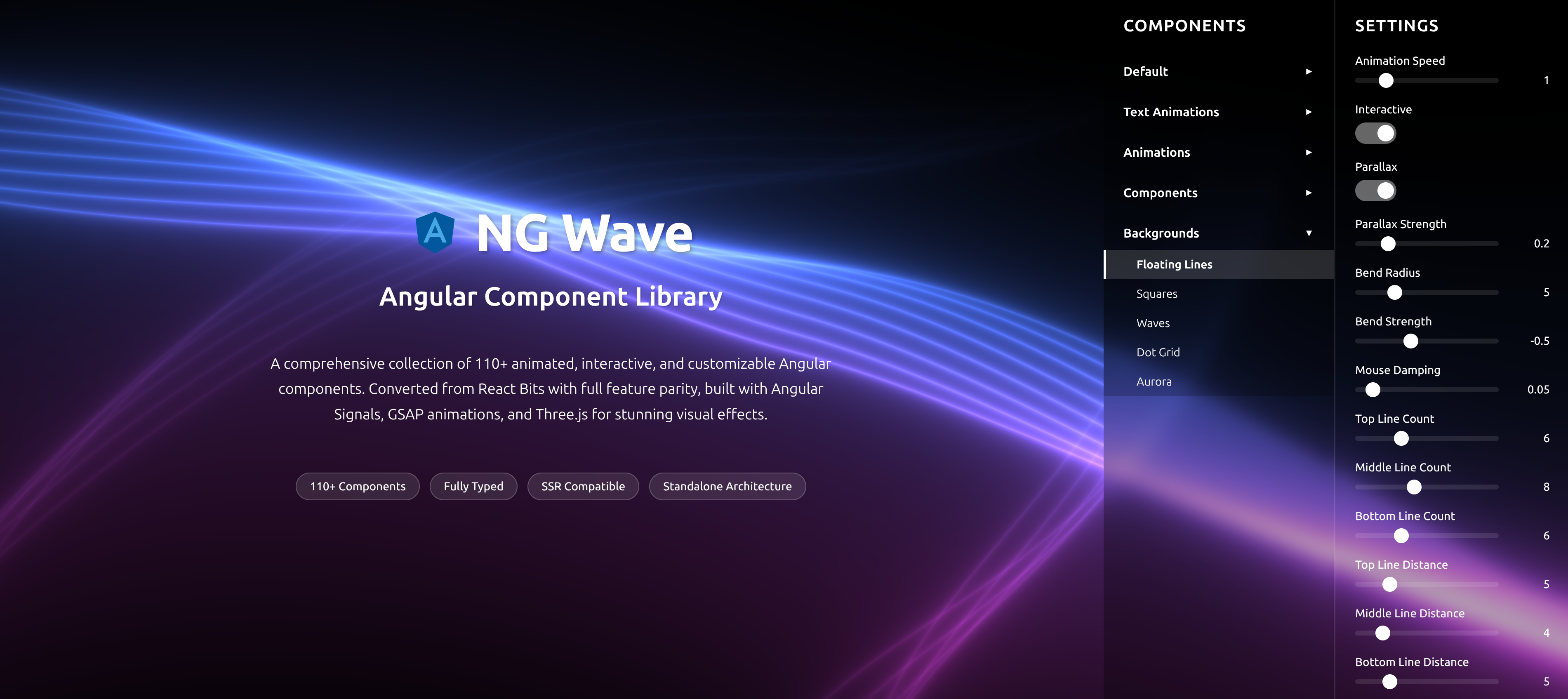
NG Wave
Angular Component Library
A comprehensive collection of 110+ animated, interactive, and customizable Angular components. Converted from React Bits with full feature parity, built with Angular Signals, GSAP animations, and Three.js for stunning visual effects.
Explore Components